Feeds:
Posts
Comments

Last week I started writing up my notes from the Queer Company sense of place panel and it all got a bit rambly so I decided to cut it up into bits. I posted the first bit here promising to follow up but that was on the 8th and all the world knows what happened next. I’ve had brains like scrambled egg all week so I apologise for the gap.

Description – too much of a good thing?

We can all probably remember those romances of the 70s and 80s – Judith Krantz is one of the authors who comes to mind – that were described as ‘sex and shopping’ romances. In them there would be pages of description detailing every delectable item of furnishings in people’s houses, and every classy item of clothing worn by the heroine, heroes and important secondary characters. Barbie for adults, the heroine would be given an amazing wardrobe and very specific sexy jobs – movie star, aristocrat, billionaire CEO – and desirable accessories – dogs, cars and horses. Everything about her was described, right down to her choice of IUD, and every twitch and quiver of her sexual encounters. These bonkbusters sold in their millions, spawning made for TV versions and introducing hundreds of young women to the absolute importance of designer labels.
I sometimes wonder if they also spawned the idea that took hold in the late 90s that books were better without descriptive passages, or speech tags and that a terse account of what a character says and does enables the reader to imagine all the frills for themselves. Elmore Leonard’s rules to write by tore through the fan fic community like a chain saw with the result that all fics in all fandoms sounded like Get Shorty. I think this is a terrific pity because description can be one of the sharpest tools in the writer’s kit.

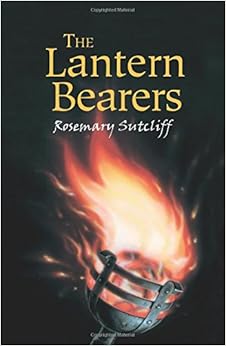
Here’s is a short excerpt from Rosemary Sutcliff’s ‘end of civilisation as we know it’ Dark Ages novel The Lantern Bearers:

Aquila knew that beach; he and Felix had used to bring their birding bows out here after wildfowl. He knew the wriggling trail of sea wrack on the tide line, the dunes of drifted shell-sand where the yellow vetch and the tiny striped convolvulus sprawled. Standing with panting breast beside Sea-Snake as she came to rest, he had the feeling that he had only to look down to see the track of his own feet and Felix’s in the slipping white sand. He caught a glance over his shoulder, and saw the tower of Rutupiae light rising against the sunset. There was a great burst of flame above the crest, but it was only a cloud catching fire from the setting sun.

There is a LOT going on in this little passage. Aquila is a man who lost everything he cared for, including his self-respect and his freedom, who has returned to a place where he was once happy. Felix was his best friend, from whom he parted suddenly and irrevocably in an act of betrayal. No wonder he distracts himself by fixing on the familiar and much loved trivia of home. But thought of his lost friend intrudes again – the slipping white sand has long since smoothed over – so he looks for further distraction. There is the light house where, after parting from Felix and watching the ‘light’ of Rome leaving the shores of Britain, he lit the beacon fire one last time as an act of defiance to show that the country had not been completely abandoned. This theme of a last flare of light before the darkness is one returned to again and again throughout the book. There are many descriptions of fires and lanterns, the guttering smokiness of tallow dips and the pure clear light of beeswax candles, which add hugely to the atmosphere of the story while adding nothing to the development of relationships or to the plot. I doubt that all would survive the blue pen of a modern editor who believes that every word has to do one or the other.

So how to use description to get over that sense of place, whether to comfort or discompose the character and likewise the reader?

More tomorrow.

Sunday Serial

Time for another bit of Joe Skidmore’s diary – 1869, east Texas, small farmers under trying circumstances.

February 9th

I haven’t written for a few days because we’ve just been too damn busy. There’s been so much rain that everything’s waterlogged, and the roof began to leak right over Isaac’s bed. Isaac being Isaac said he needed to sleep in mine since he has to do a full days work whereas I can loaf around at home on account of my bum leg. I guess we got a bit loud because Pa came in and, for once, took my part. He hauled Isaac out by the ear and made him sleep on the rug by the fire. We put a bucket on the bed to catch the drips and the next day spent a lot of time trying to fix shingles over where the wet is getting in. It’s hard to work on a roof that’s slick with green, when the rain’s beating down and the wind’s like to blow you clear over the hog pen. But I only fell off once. Isaac fell off twice and the second time put a ding in his scalp that, Dad said, made him look like he’d been scalped.

The shingles are holding up, so far, but I fear it’s just a patch and when the good weather comes we’ll have to take off the leaky plank. It looks rotten to me. But right now there’s so much rain! We dug a little ditch to take the water away where it drips off the eves so it can run down to the creek, but the creek came to meet it. We’re high enough for it not to bother us too much but the O’Connells down stream have had to move out of the house because the creek was lapping at their step.

They had a bit of time and took their things up to the barn and put a tarp over it to keep the drips off. Pa says it’s their fault for being lazy and that they should have built higher and further away but I think it’s a pity. It can’t be nice to lose your home. Ma thinks so too and we cooked up some biscuits and a pot of beans to take over for them. Ma says that when they were new come to the area people shook their heads over where they built but nobody spoke up about it. Seems a bit unfair to laugh at them now.

The wind’s really howling tonight. Maybe if I’m not right for being a cowboy I could go to Corpus Christi and learn how to build boats. Things go on the way they are we might be needing an ark.

On Saturday November 5th I attended Queer Company 2, an event for authors and readers organised by the lovely ladies of Manifold Press. Thank you Fiona Pickles, Morgan Cheshire and Julie Bozza – and everyone else involved in the organising – you did us proud.

It was a BRILLIANT day with tea and cake and fabulous people to talk to, a new anthology to launch and exciting talks that I found hugely inspiring. Many thanks to Farah Mendelsohn, K J Charles, Chris Quinton, Julie Bozza, Ellie Musgrove, JL Merrow, Alex Beecroft, Charlie Cochrane, Sandra Lindsey and Anna Butler. Aleksandr Voinov was the MC and kept us gently in check when we got rowdy.

The last panel of the day was about ‘a sense of place’ – how it can add a lot to a story if the characters seem really at home – or completely uncomfortable – in their situation. I was listed to deliver this with Sandra Lindsey, who writes terrific historicals, and Anna Butler, whose sci fi and fantasy is out of this world. I had good intentions beforehand and had made loads of bullet point notes to try to cover, but in the hurly burly I got nervous, gabbled a lot and strayed completely off the point.

Here then are some of the things that I would have said if my brain had been working. And HERE is a similar write up by Anna Butler which is very well worth reading.

A Sense of Place

Let’s start with a definition. This one is from the Geography Dictionary:

Either the intrinsic character of a place, or the meaning people give to it, but, more often, a mixture of both. Some places are distinctive through their physical appearance, like the Old Man of Hoy; others are distinctive, but have value attached to them, like the white cliffs of Dover.

Less striking places have meaning and value attached to them because they are “home,” and it is argued that attachment to a place increases with the distinctiveness of that place. Planners use this argument by consciously creating or preserving memorable and singular structures to make a space distinctively different. The Cardiff Bay Development scheme has done this, first by preserving the best of the old buildings, and even relocating one — the Norwegian church. All this is done to encourage in the residents an attachment to that place.

A final element is our own experience of that place; if you had been desperately unhappy in central London, it might be that the sight of Trafalgar Square would reawaken a sense of misery in you.

And another much more concise one from cultural geographer J.B. Jackson, in Discovering the Vernacular Landscape:

It is place, permanent position in both the social and topographical sense, that gives us our identity.

I think that it is the latter quote that is most important to us as authors. Where a character originates has a profound effect on his appearance, his accent, his vocabulary, and his patterns of thought. He may behave differently when in his own environment from how he behaves when he is far away where different rules prevail. He may revel in the freedom, or be crushed by the differences – both reactions excellent ways to develop conflict. But we need to show the differences and to do that we need to use description.

Here is a description of the Fens from Nine Tailors by Dorothy Sayer:

Spring and Easter came late together that year to Fenchurch St Paul. In its own limited, austere and almost grudging fashion, the Fen acknowledged the return of the sun. The floods withdrew from the pastures; the wheat lifted its pale green spears from the black soil; the stiff thorns bordering dyke and grass verge budded into a softer outline; on the willows the yellow catkins danced like little bellrope sallies and the silvery pussies plumped themselves for the children to carry to church on Palm Sunday; wherever the grim banks were hedge-sheltered, the shivering dog-violets huddled from the wind.

Not only does this passage get over the appearance of the place but also the chilly feel of it. Look at the words used – austere, limited, grudging, stiff, grim, shivering. A man from such a background is probably going to have a very different mind set to one raised on the sunlit lavender fields of Provence. A man from Provence placed in that environment, especially if under-dressed for the climate, is going to be like the dog-violet, shivering and longing for shelter. He may feel alien, off-balance, a fish out of water – horrible for him but fantastic stuff for plot.

I also think it’s a pity that such a description – this is just one paragraph of it – is unlikely to be acceptable to a modern reader or editor. Description, in it’s fullest and most delicious sense, is out of fashion despite the common instructions to show and not tell.

But that’s more than enough for today. I’ll post a bit on description and some more examples tomorrow.

Sunday Serial

Another snippet of a genuine old school YA western which, in the fullness of time, will have all the usual trappings and cliches plus the slightest tinge of M/M romance because why not?

This week, more of the cruel realities of life.

Feb 5th

A coyote got to the hens last night and killed two and injured one. He carried off the dead ones but the hurt one got up onto the roof of the pig pen.

She seemed okay at first but the coyote had ripped one of her wings clear off. I reckon it might have healed up but Ma reckoned it would be cruel to keep her. Pity because she was one of our best layers.

I did it easy so she didn’t know, just a hurt hen sitting quiet in my arms one moment and a floppy bundle of feathers the next. But there was meat aplenty on her so Ma showed me the trick of frying chicken and we put the bones in the stock pot. We saved the feathers too. Ma says there’s almost enough for a pillow. So our poor grey hen may have died but the only bit that was wasted was the cluck.

comfy chairMy guest today is an author that I first met at this years UK Meet, and I most most intrigued to hear about his first release, The Necessary Deaths, which came out on the first of November and which I, for one, am gagging to read.

Please join me in welcoming David Dawson.

~~~

Hello, David. Can you tell me a little about yourself? For instance, do you have to have a day job as well as being a writer?

I work as a documentary film maker. I was with the BBC for about twenty years, firstly as a trainee journalist then in television making documentaries, before going freelance. I’ve filmed all over the world, as a director and a producer, most recently making educational and charity videos.

I’m still producing videos, but my son is steadily taking that over from me, although I do some camera operating for him sometimes; it’s great being directed by your son!

When you aren’t writing, is there any other creative activity you enjoy? Have you ever written about it?

I sing bass with the London Gay Men’s Chorus. They’re a great bunch of guys and they’ve been my strength and support over the last few years. We’ve sung in all sorts of places including: at Sandi Toksvig’s wedding to Debbie, at the West London Synagogue for World Aids Day, in St Paul’s Cathedral for Age UK and outside the House of Lords when the House debated the Equal Marriage Bill. Next year we’re off to New York and Chicago to sing alongside the Gay Men’s Choruses there. No, I’ve not written about the Chorus – yet. Look out for their appearance in a future mystery!

What are you reading? Can you recommend something that you wished you’d written yourself?

I’m re-reading Holding the Man by Timothy Conigrave. I’d read it a few years ago, and when I saw they’d made a film of the book, I worried they’d spoil it. Not at all. If you see the film, or read the book, be ready to weep buckets!
I aspire to the beautiful prose style of Armistead Maupin. He just gets better and better. His more recent books surpass the early Tales of the City books. Those early books were great fun, but it’s clear that with maturity, comes reflection and insight.

In that crucial inspiration stage of a new story which comes first? Plot, situation or character?

Oh that’s a tricky one, because they’re like Siamese triplets. They’re inseparable. I suppose for me the plot and core characters are born pretty well simultaneously. That is, I know who’s going on what journey and where they’re going to end up. Once I’ve fleshed out the characters in my head and on paper, I invent situations for them to deal with, on the journey through the book. Then the supplementary characters evolve, as the plot evolves. Sometimes I’ll experience a situation with someone in real life, then I’ll work out how to write it into a book.

Do your characters arrive fully fledged and ready to fly or do they develop as you work with them? Do you have a crisp mental picture of them or are they more a thought and a feeling than an image?

I like to spend time on developing histories for all my characters, I use pictures a lot for that, and names are very important. Once I set those, I’ll go for a ride on my motorbike, or cycle somewhere, and think about the character and about what has already happened to them. It helps so much in creating their motivation for doing things, or explaining why they react in a certain way to new situations. Once I’m writing the story, I’ll add to that back-story as events unfold. I have a spreadsheet full of character descriptions and images, to remind me when I forget what colour their hair is!

Is there any genre you would love to write, ditto one you would avoid like a rattlesnake?

I’ve got an idea for a series in the science-fiction/supernatural genre, which I’m developing at the moment. There was a BBC drama series many years ago called “Out of the Unknown” which had a huge influence on me.

It took ordinary everyday circumstances, and then twisted them slightly, creating daytime nightmares. I think they’re far spookier than the usual night-time stuff.
I don’t think I’m cut out for historical drama/romance. My son’s the historian, not me! That said, I’ve been thinking about a thriller series set around The Chilterns during the Second World War. The Ministry of War had some very interesting places tucked away in this countryside, including what was called “Churchill’s Toyshop”, where boffins invented all sorts of amazing devices to defeat the enemy.

Do you find there to be a lot of structural differences between a relationship driven story and one where the romance is a sub plot?
Pretty well all decent novels are relationship driven. Even Tom Hanks, the lone survivor in Castaway, had the inanimate volleyball Mr Wilson to talk to!

The Necessary Deaths has a strong romantic plotline in the developing relationship between Dominic and Jonathan. The extraordinary circumstances that they’re plunged into test their relationship and develop it further, in a way that probably wouldn’t have happened otherwise. I give the romantic story plenty of room to breathe, because it’s integral to the thriller. The romance between Dominic and Jonathan is what motivates them to react in the way they do.

When writing series, what measures do you take to keep track of those annoying little details – eye colour, car type, name of ex-spouse’s dog – that are so easy to drop into text and so easy to forget about?

Yes, I have acute OCD on this! I have a spreadsheet full of detail and photographs about every character, even the minor ones. As soon as I write a new piece of description in the story, I add it to the spreadsheet. Photographs of people also help me imagine their back-stories, and how they might react to situations. One of my favourite tasks is to spend an evening scouring the internet for photographs of gorgeous men who might fit certain characters! It can be very distracting…

Put together your ideal team of men/women – drawing from all and any walks of life, fictional or non-fictional – who you would want to come to your rescue if menaced by muggers/alligators/fundamentalists?

George Clooney can come to my rescue! Every time. He’s been a hero of mine ever since he rescued the boy from the storm drain in episode seven, season 2 of ER. In fact, I’m such a big fan, he’s a major character in a short story of mine that Dreamspinner Press is publishing in its Love Wins Anthology for Orlando this December.

But you want a team? Well, I think Dame Maggie Smith would stand up to any mugger, any day! She and George would make a fabulous team. In fact, I wonder why they haven’t been paired on screen already!

clooney-smith

Villains are incredibly important in fiction since they challenge the main protagonists and give them something to contend with beyond the tension of a developing relationship. The cruel sea. The serial killer. The society itself. Your hero’s inner demons. What sort of villains do you prize?

Villains have got to be credible, so they need reasons for being bad. No one is all good, or all bad.

In The Necessary Deaths, the principal villain is motivated by ideology, and is very bad. But they still have a seductive side, which makes them intriguing and even appealing. Everyone has the capacity to be a villain, circumstances and back-story dictate whether the transformation to the dark side happens or not. In the second Dominic Delingpole Mystery I’m tackling this whole issue, which I think is fascinating.

What are you working on at the moment? Can you discuss it or do you prefer to keep it a secret until it’s finished.

The Dominic Delingpole Mysteries will unfold over five books. I’ve plotted the overarching story, and I’m just finishing the second book in the series. I’m also working up the World War Two science fiction tale in the background, it’s quite a juggling act I can tell you!

Could we please have an excerpt of something?

From The Necessary Deaths:

“Mrs. Gregory,” said Dominic. “I would be very happy to have you as a client, but I’m not sure in what way I can act for you.”

Samantha smiled. “And neither am I just at the moment. Let’s call you a professional friend. I have no one else who I can turn to, and your legal mind will help me to see things a little more clearly. As you can tell, I’m a little emotional just now.” She turned away to wipe a tear from the corner of her eye. Then she looked at him steadily.

“Simon and I are very close. Ever since Richard, his father, died in a climbing accident, we have been a very tight family unit. I’d like to think Simon and I can tell each other everything.”

Dominic wondered if she was keeping up a brave front, or whether she really believed Simon told her everything. Her comments clearly contradicted what Simon’s housemate Jay had said an hour ago. Dominic decided that, as she was his client, he owed her the duty of honesty, and he should tell her about what he had learned in the last few hours.

“Samantha, I’m afraid I believe Simon may not have confided everything in you in recent times. I went to see John this morning before coming here. He told me about their relationship and how Simon was not yet ready to tell you.”

Samantha smiled.

“Dominic, I’m his mother. Do you think that I didn’t know?” She sighed. “I knew he was finding it difficult to tell me, and I was waiting for him to pick the right time. I didn’t want to rush him.” She paused. “But yes, you’re right, and I am wrong. Simon hasn’t confided everything to me; I merely know and am waiting for him to tell me. John is a lovely boy, and I was just pleased to know that Simon is happy.”

Samantha narrowed her eyes slightly as she asked, “But why do you think that means he must have kept other secrets from me? Surely you of all people must know how difficult it is to come out?”
Dominic blushed briefly. “Everyone’s circumstances are different, of course, and for young people it really is much easier….”

“Oh nonsense! Can I just say that I think it’s a bit rich for you to judge Simon when you’re so secretive about yourself? We spent nearly three hours in the car together last night, and I still don’t know whether or not you have a boyfriend!”
This time Dominic’s face turned crimson.
“Samantha, could we just get back to—”

“Well, do you?”

Dominic sighed. “I think it’s my turn to acknowledge that I am wrong. Yes, I do have a partner, and no, I am not very open about it. In this day and age, it probably is unnecessary for me to be quite so discreet. But after a while, it gets to be almost a habit.”

Samantha giggled. “Oh, Dominic, how delightfully bashful you are! I imagine that it’s rare you have a conversation like this with your clients.”

Dominic smiled. “Samantha, I can tell you truthfully that I have never had a conversation like this with my clients. You must meet Jonathan some time. I think you two would get on like a house on fire.”


A young journalism student lies unconscious in a hospital bed in Brighton, England. His life hangs in the balance after a drug overdose. But was it attempted suicide or attempted murder? The student’s mother persuades British lawyer Dominic Delingpole to investigate, and Dominic enlists the aid of his outspoken opera singer partner, Jonathan McFadden.

The student’s boyfriend discovers compromising photographs hidden in his lover’s room. The photographs not only feature senior politicians and business chiefs, but the young journalist himself. Is he being blackmailed, or is he the blackmailer?

As Dominic and Jonathan investigate further, their lives are threatened and three people are murdered. They uncover a conspiracy that reaches into the highest levels of government and powerful corporations. The people behind it are ruthless, and no one can be trusted. The bond between Dominic and Jonathan deepens as they struggle not only for answers, but for their very survival.

Buy Links:
Dreamspinner | Amazon UK | Amazon US | B&N | iTunes

BIOG:

David C. Dawson is an author, award-winning journalist and documentary maker, living near Oxford in the UK.
He has travelled extensively, filming in nearly every continent of the world. He has lived in London, Geneva and San Francisco, but now prefers the tranquillity of the Oxfordshire countryside.
David is a Mathematics graduate from Southampton University in England. After graduating, he joined the BBC in London as a trainee journalist. He worked in radio newsrooms for several years before moving to television as a documentary director. During the growing AIDS crisis in the late eighties, he is proud to say that he directed the first demonstration of putting on a condom on British television.
After more than twenty years with the BBC, he left to go freelance. He has produced videos for several charities, including Ethiopiaid; which works to end poverty in Ethiopia, and Hestia; a London-based mental health charity.

David has one son, who is also a successful filmmaker.

In his spare time, David tours Europe on his ageing Triumph motorbike and sings with the London Gay Men’s Chorus. He has sung with the Chorus at St Paul’s Cathedral, The Roundhouse and the Royal Festival Hall, but David is most proud of the time they sang at the House of Lords, campaigning for equal marriage to be legalized in the UK.

You can follow David at the following sites:
Facebook | Twitter | Website | Blog

necessarydeathsthe_headerbanner

Sunday Serial

I’ve been very bad about updating this blog and this serial so I’m going to do a whole batch in one go so there will be at least something on a Sunday for a few weeks to come.

This serial takes the form of the diary entries of a young man called Joe Skidmore who lives in the eastern part of Texas in 1869. Joe has some problems and feels that life is passing him by. Later lefe will come and grab him by the scruff of the neck and he’ll go on an adventure but it’s early days now. Last time he was talking about chickens and his late sister.

Feb 2nd
I asked Ma about my sister again last night but she just went quiet and told me that she’d been very sweet and had loved me. But after we went to bed Isaac told me a bit more.
Jess was three years older than him and he’s five years older than me which means she’d have been nine. Jacob, who was thirteen then, was out with Pa, and Jess and Isaac were helping Ma pick berries. They’d left me on a blanket and the snake must’ve crawled on there to warm itself. Jess grabbed it to get it away from me. Just grabbed it with her bare hands and it turned and bit her good, then she dropped it and it bit me. Isaac says he don’t remember much about it, just that Ma cried.
Jess is buried up the hill a way, by Granpa and that’s where we will all lie one day.

February 4thbiscuits
I made biscuits again today and they were fine. Pa asked for seconds. Ma says leave it a week ’til we tell them. Then if they complain we can point out that nobody’s died.

comfy chairMy guest today is a man I have known for over a decade – I even used to beta read for him way back in the dim and distant past before his first runaway successes in M/M romance.

Welcome B.G.

Elin: Can you tell your readers a little about yourself? For instance, do you have to have a day job as well as being a writer?

BG: I have an Evil Day Job! OMG! I’ll write a novel about the place someday. Let’s leave it at that and talk good stuff. I live in Kansas City—that’s Missouri and not Kansas—with my husband. We’ve been together over fifteen years, two of them legally married. I have a grown daughter and two wonderful little dogs (my daughter is pretty darned wonderful as well).

I love to read, just about every genre you can name, including fantasy, horror, science fiction, adventure, mysteries and of course, romance! I came to the last late though. My Mom read Harlequin and Silhouette Romances all my life, but I never read them. It was as an adult that a friend introduced me to a wonderful book called A Knight in Shining Armor—a time travel romance novel—by Jude Deveraux, and boy, I was hooked!

Growing up and reading all those genres, especially literature, had a heavy influence on my romance writing. I am a pure romantic, believe me. But I come to romance as the natural life of the novel rather than the Harlequin angle. Not that there is a darn thing wrong with those romances. They give so much hope. But I’m ignorant of the formula. It means some people love my stories, and some wish for a little less…angst! LOL!
I also write about gay men. I write what I know. My gay men do the things that gay men do. And again, sometimes people love that, and some wish for a little bit more…Harlequinism! LOL!

Elin: You’ll have to define Harlequinism for me some time. I’ve always assumed that gay men do things like pay their taxes, walk the dog and do laundry, in between, in the stories I read, being incredibly heroic under trying circumstances. Maybe we read different types of book? What are you reading? Can you recommend something that you wished you’d written yourself?

BG: Two books actually (I do that a lot). Janet Evanovich’s Plum Spooky, a very fun mystery, and John Inman’s most recent Belladonna Arm’s novel, Ben and Shiloh. Delightful! Loving it! I don’t have a lot of time to read between writing and working all the hours I do at my Evil Day Job, but I have discovered Stephen King’s advice is absolutely true. “If you don’t have time to read, you don’t have the time (or the tools) to write.” So I find time to read. Reading has made me the writer I am today.

Elin: When writing series, what measures do you take to keep track of those annoying little details – eye colour, car type, name of ex-spouse’s dog – that are so easy to drop into text and so easy to forget about?

BG: With each book I write, I make what I called a “concordance.” As I write, I jot down the car and its color, the dog’s name, etc. I learned a long time ago I had to do that. Otherwise I made all kinds of mistakes. Once a character was an only child in the first chapter and had a sister in chapter nineteen. We caught in the galley weeks before it went to print! Learned my lesson there.

And with Winter Heart being a part of a four book series—Seasons of Love—and with each book being quite thick, I had to keep extensive notes. There was a lot to keep track of. And I still forgot stuff. I am thankful for beta readers with minds like steel traps!

Elin: Did you find it hard to maintain character voice and keep it true over the whole series. Especially bearing in mind that it’s several years since book one came out?

BG: You know it really didn’t. I mean, they are all pretty distinctive. I forgot a few of their little quibbles or gestures (who was it that waggled his eyebrows and who was it that could raise only one) but I would often go and read the first chapter of the preceding books and that is all it took. Each book of the series begins with what the four best friends call “Porch Night.” It is the night that no matter how busy they are, they promise to never miss getting together. They carry on and camp it up and have a general good time. Reading that would always toss me right into character with a snap. And the more I wrote about them, even though it has been over two years since I wrote that first book, the books are thick. I really came to know them. It was a pleasure to keep going back to them. And I hope it is for the reader too!

Elin: Heroes are great, and they ar what the majority of readers are reading for, but I have to admit to a great fondness for secondary characters. You can tell a lot about a hero from how he treats people he isn’t hot for! Which of the secondary characters in your series is your favourite?

BG: That’s a hard one. Because quite a few of those secondary characters later wind up being the love interest of a main character’s, making them main characters as well. For instance, the young Samoan named Peni who is a friend of Scott’s in the first book, Spring Affair, winds up becoming the love interest of Asher in the third book, Autumn Changes.

Then there are characters that I create originally more as tertiary (or do they create themselves?) that really do take on a life all their own. For instance, Blue—one of the “bad dates” in my novella Bianca’s Plan—has wound up showing up over and over again. He insists! I’ve come to love the little guy, and I’ve gotten quite a few requests to write his story.

Oh! And I adore Peter Wagner. He first showed up in The Boy Who Came in from the Cold, and he’s popped up several times since. He has been in my head since I was about eighteen and it was wonderful when he finally found himself in print. God, he holds a special place in my heart. I can’t wait for him to show up again.

Elin: I think Peter was a strong and benign presence in the first story you showed me, way back in 2003!!
Villains are incredibly important in fiction, too, since they challenge the main protagonists and give them something to contend with beyond the tension of a developing relationship. But there are all kinds of villains besides the mainstays of M/M romance – evil exes or scheming, predatory women. Your heroes may have to contend with the cruel sea, a serial killer, society itself or your hero may have inner demons that threaten his happy ending. What sort of villains do you prize?

BG: When this question started, Howard leapt to my mind. He was certainly a villainous presence in Wyatt’s life through my Seasons of Love series. But by the time of my new novel, Winter Heart, he is mostly gone. But then you finished your question and it turned very interesting indeed. Yes! The villain doesn’t need to be a specific person, or even a human at all. In Winter Heart small town life is a villain. A crazy father. Religion, when it turns wrong. Fear. Sickness. And a blizzard. And in the long run, that’s the villains I prefer. Because most of the time, when the villain is human—they don’t perceive themselves that way. And they can change. And that is what I find very interesting indeed.

Elin: What are you working on at the moment? Can you discuss it or do you prefer to keep it a secret until it’s finished?

BG: I don’t want to talk about something that I am actually writing, but I can tell you what you can expect to see from me next. For instance, a few years ago I wrote a novella called Trust Me. I love that story, but… It wasn’t what I wanted. I was limited by a word count on that book and there was a lot I wanted to do and say that I didn’t get to. When the publisher that bought that story from me went out of business—and that was a sad day—I was very pleased when Dreamspinner Press picked it up. But more than that, they gave me the word count I originally wanted. I didn’t think that story was bad, but I was very happy that I got to metamorphize it into the book I had always wanted to write. Now it’s called Do You Trust Me? and I am very proud of it!

Before that you will see my very first co-authored story which is coming out for Christmas. It’s called Mele Kalikimaka and I wrote it with an up and coming young author named Noah Willoughby. He’s going to be someone to watch out for. The whole process went surprisingly smoothly and I can’t wait to see what people think.

And then after that? Why don’t be surprised if you see a little novel called Blue!

Elin: I remember beta reading Trust Me. I’m glad you had the chance to expand it. Now, could we please have an excerpt of something?

BG: You sure can! In the following scene we see Wyatt get an unexpected call from his sister where he finds out his past is sneaking up behind him….

Wyatt wasn’t home a half hour when his cell phone rang. When he saw who was calling, he froze. It was one of his sister’s two annual phone calls. He took a deep breath before he answered it. “Feliz Navidad,” he said cheerfully.
“Merry Christmas to you too, big brother.”
“Thank you, little sister.” He closed his eyes. The familiar conglomerate of emotions were swirling through him: love, hurt, loyalty, shame…. It was always this way.
“And how are you doing today?” she asked. Her voice was cheerful-as usual. Seemingly genuine. And despite everything, he believed she was being authentic. They’d been nearly inseparable as kids, and surely that was what really mattered. Not what came later.
“I’m pretty good,” he answered, deciding to tell her how he felt in this moment, and not the general feelings that had ruled over him the last few months. “Just got back from Sloan’s house. He and Max had me over for Christmas dinner. You should see the T-shirts they got me.”
Which she wouldn’t approve of, but what the shit.
“You mean your… Howard didn’t make his big dinner this year?”
There it was. Already. But at least she’d said his name. It was more than his parents had done-when they still spoke to him. They. Meaning her. His mother. His father hadn’t spoken to him in, what? Ten years? When his old man had said he’d been right all along. That Wyatt’s evil ways had led him to hellfire. To homosexuality. And worse. Thinking that he could find love with another man.
Might as well get it over with. Get it done.
“I’m-” His throat locked up.
Shit.
It wasn’t going to be that easy.
Deep breath.
“I’m… I’m not with Howard anymore,” he managed and found himself once more wrestling his grief back down into its place deep inside that room he’d made for it.
Wyatt heard a small intake of breath from the other end of the phone. He didn’t know if he really heard it or if it was just his imagination.
“I…. Wyatt, I….” Then a moment of quiet. Because what was she supposed to say? She was sorry? Because she wouldn’t be, would she? She wouldn’t be allowed to be. But then she surprised him. “Wyatt, I’m so sorry. Are you okay? How long has it been?”
“A couple of months,” he said, his voice miraculously not trembling. “He left me.” Kicked me out is what he did.
“Why didn’t you call?”
Why hadn’t he called? Really? “And hear you say, ‘Well maybe now you can find a nice lady and settle down and have a family’?”
“Oh, Wyatt.” She sighed. “Like that’s ever going to happen.” Long pause while Wyatt tried to figure out what to say to that. Then just before he could: “Although nothing’s impossible through our Lord.”
“Oh really, Wendy?” Wyatt laughed. It wasn’t a feel-good laugh. How many nights had he cried himself to sleep begging God to make him straight? Hundreds? And when He hadn’t done what Wyatt had prayed for, it was the final straw. It was what made him finished with his family’s religion forever. “Don’t even think it.” After all, you knew I was gay before I did. Which wasn’t entirely true. She was just the first to say it out loud.
Another sigh. Then she asked, “So is Sloan your new b-boyfriend?”
B-boyfriend? She could hardly say it. And she was the one who had thought it was so cool to have a gay brother. And could she be his best “person” if he got married? And wouldn’t it be hil-arious when their parents found out? “You’re supposed to carry on the family name,” she had said.
As it turned out, it hadn’t been hil-arious at all. Wyatt had always known that. It was part of why it had taken him as long as it had to admit to himself he was gay.
“Sloan is just a friend.” Well, hardly just a friend. “He’s my best friend in the world.”
“I’m glad to hear that,” she said. “We all need best friends. What did that movie say that Mom liked so much? In a cold world, you need your friends to keep you warm? Or something like that?”
The Big Chill. Except his mother only watched it when his father was out of town and couldn’t walk in on her. She wasn’t quite old enough to have been a teenager in the sixties. But her older sisters were, and they had played the music on their record players when she was little. She’d lived the sixties vicariously through them.”
“The Big Chill,” he said aloud. Then asked about her husband—the bastard—and her kids.
“Oh, goodness, Mary! She just got straight As. Can you believe it? A child of mine? Miss C Average Wendy Dolan? And my kid is making straight As?”
“That’s nice, Wendy.”
She sighed. “And then there’s Norman Jr. He’s in and out of trouble. Second grade and a terror. Sometimes I don’t know what we’re going to do with him.”
“You’ll think of something.” She was born to be a mom, if not a wife. And why wasn’t she mentioning her husband? “And Norman Sr?”
“Ummm… Norman is Norman, you know? His job at the dam is stressful. There was so much rain last year, and the lake was higher than it had been in years. It’s calmed down a little with winter, but you know….”
Wyatt didn’t know. Didn’t have a clue. He’d toured the dam, of course. What with Mountain Home, where he went to school, being so close to one of the biggest lakes in the country, there was no way to avoid school field trips there. Plus the fact that the little town where he grew up was so close he could walk to it. But what the workers actually did there had always been sort of a mystery to him. So no, he didn’t know what Norman did. Then there was the fact that he’d never met the man. He hadn’t met her kids either. And he figured he probably never would.
“He’s leading the men’s prayer group on Thursdays, and he’s applied to be a deacon. I’m sure he’ll get it. I can’t imagine them turning him down.”
“That’s nice,” Wyatt said, not thinking so in the least. The only thing he could think of that sounded worse than being a deacon in the Baptist church he was raised in was maybe being the guy who drove that truck that vacuum-sucked the shit out of the porta potties at Camp.
“He really likes it, Wyatt. He says it gives his life purpose. Oh, and now he’s doing outreach at the prison in Calico Rock. He goes once a week and leads a prayer group there too. He says it’s a wonderful thing to help those men turn from their criminal ways and seek the Lord.”
Wyatt shifted from one foot to the other and found himself thinking about eggnog and whiskey. Was he tipsy enough to listen to any more of this? He went to the kitchen to see what he had to drink. “I….” Wyatt coughed. “I would imagine that adds to his stress, though.” He looked around the kitchen. Oh, thank the gods. Some tequila was on the floor next to the stove. But what did he have to drink it with?
“I think it relieves his stress actually,” Wendy said.
“All that soul-saving,” Wyatt managed without choking. He didn’t have anything in the refrigerator that would go with tequila. Certainly not milk or the eggnog. Did the eggnog have whiskey? He didn’t think so. Did he have any Country Time lemonade?
“Yes,” Wendy said, and then there was a long pause.
Yes? Yes, what? He couldn’t remember what he’d asked her. Wyatt found a couple of single packets of Crystal Light pink lemonade. It would have to do. In the meantime he opened the bottle and took a slug of the tequila. He winced, shuddered. Gods! Blech! He coughed. Shuddered again. Cleared his throat. Began to make a glass of the Crystal Light. Tried to build up the courage to ask the question.
Thankfully Wendy took that out of his hands. “Momma and Daddy came over for Christmas dinner.”
“Wow,” Wyatt said. “You guys didn’t go over there?”
“Ahh…. No, Wyatt. Not this year. Mom helped, but Daddy…. Well….”
Well what? Wyatt wondered.
“Daddy’s been a little… funny lately.”
“Funny?” Wyatt asked. The last thing he had ever considered his father to be was funny.
“Well, they think he had a little stroke.”
Wyatt jerked. Almost knocked his glass over. “Wh-what?”
“A little one,” Wendy said quickly.
Wyatt’s heart was rushing. “A little one?”
“Yeah. He…. Well, the other day he got up and almost fell over. He said everything was… tilted. He was having trouble walking. And he was having a little trouble talking. Slurring his words, you know? Mom wanted to take him to the hospital, but he wasn’t having any truck with that. Until he did fall, that is, and we insisted. They couldn’t find anything at first, but then they thought he might have had a very minor stroke.”
Wyatt found he could hardly move. Strokes. Were they ever minor?
“His doctor said he should have gone to the hospital right away because there are drugs they can give you to help, but it’s got to be in the first three or four hours. But as Daddy said, I don’t know what good that would have done since they weren’t even sure he had one.”
Wyatt shook himself. “Is-is he okay now?” He reached for the tequila and added a good bit to his glass, put the bottle down and took a hefty drink before stirring. It was a mistake and he began to cough. Whoa! Strong!
“Anyway, that’s why they came to our place. Norman was a little mad at first. Until Momma said she’d already bought the turkey and everything so he didn’t need to buy anything. I just ran to Damview and picked up everything from her place. We didn’t have to buy anything except some Stove Top. You know Norman likes that better than the homemade stuff.”
Wyatt didn’t know that either and thought it sounded crazy. How could anyone like that boxed shit when they could have his momma’s stuffing?
He quite suddenly found himself missing that stuffing, even though he did a fairly good knock-off. He’d even made a change or two through the years: sage from Sloan’s mother’s garden and a can of black olives, chopped up real fine. Howard had loved it, anyway. And what the fuck was he doing thinking about black olives?
“H-how did he act?” Wyatt asked her suddenly. Gods. Why was his heart doing that little dance?
Unbidden he saw his father-clearly, as if he were right there—standing over him. Tall. Hair and thick mustache going gray. Those intense blue eyes-like they were chipped from a glacier. And how that mouth could smile… or frown. You didn’t want to see the frown.
“He seemed fine, though he got tired fast. He wanted to help drain the turkey-you know he always does that for Mamma—but with Norman here, there was no sense in that.”
“No. Of course not.” Wyatt took another drink of his pseudo cocktail-drank it slower this time. But it was a big drink.
“I think we can all breathe a deep sigh of relief,” Wendy said in seeming conclusion. “God is taking care of things. He always does.” But why didn’t she sound like she believed what she was saying? “At least now Daddy will pay attention. Dr. Shelvy insisted that he get to the hospital immediately if any symptoms reoccur. Counseled us all on what to watch for. Gave us literature and everything.”
“That….” Wyatt’s voice caught. Dammit! “Th-that’s good.”
“He’ll be fine, Wyatt. I’m sure he will be. Trust in Jesus.”
Trust in Jesus? Had she really said that? She wanted him to trust in Jesus? Wendy was blind and deaf and who knew what else. She would never learn. Never. Never see him for who he was. Chose not to.
And now the tears wanted to come. Fuck that!
Wyatt picked up the bottle again and took a swallow. He shuddered but didn’t cough. It didn’t stop the tears, though. At least these were caused by the booze, he told himself.
“What?” Wendy called out.
What?
“Yes. I’m on the phone. Yes.”
Wait. She wasn’t talking to him.
And then she was. “Look, Wyatt. I need to go.” And, “Yes, it’s my brother.”
Wyatt closed his eyes and leaned heavily against the kitchen counter.
“Wyatt, I’m sorry. I have to cut this short. Merry Christmas, big brother.”
Wyatt sighed, forced back his body’s traitorous desire to cry. “And a Happy New Year, little sister.”
“Yes, Wyatt. And that too.” Then, with no preamble, she hung up.
Wyatt stood there a long time without moving. Then he made a second cocktail with the last of the Crystal Light and took the full glass and the one he’d already drunk half of and went back to the living room.
He watched Friends. The episode called, “The One with Phoebe’s Dad,” and let the six people he was getting to know sweep him away. Who knew? Maybe Chandler and Joey would finally get it on. That would be hot!
That night he didn’t dream about Howard.

Wyatt wound up staying up just past midnight, having watched eight episodes that first night. They made him laugh. He needed to laugh. It was strangely better than beating off, and didn’t make him feel lonely when he was done.
Tonight he had just started watching a Christmas episode, “The One with Phoebe’s Dad”—second season, third?—when the doorbell rang. He looked at the front door in surprise—Phoebe was just commenting about the size of Ugly Naked Guy’s Christmas balls—then shrugged and got up to see who it was.

~~~~~~~~~~~~~~~~~~~~~~~~~~~~~~~~~~~~~~~~~~~~~
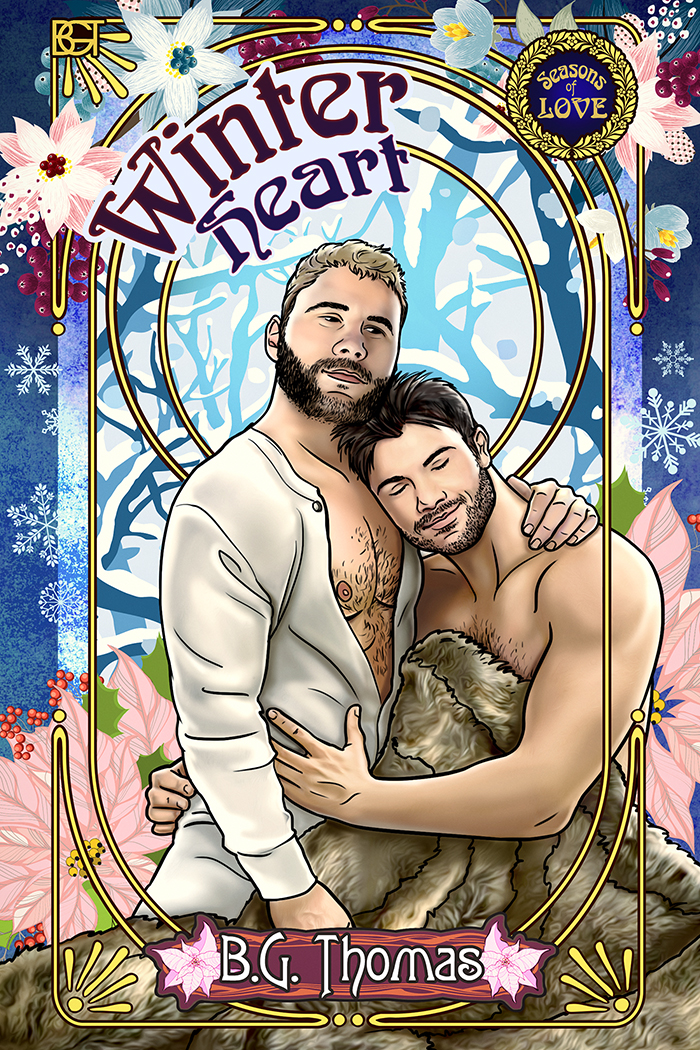
Winter Heart

Seasons of Love: Book Four

For over ten years, Wyatt Dolan defined himself as the lover of Howard Wallace. Howard made sure Wyatt’s self-worth depended on that role. So when Howard dumps him, he is lost at sea in a storm without a rudder. If it wasn’t for his supportive friends, he doesn’t know what he’d do. Finally, after a series of disasters, he escapes to Camp Sanctuary—a sacred place to him—where he can be alone, try to put his past behind him, and find a new direction for his life.

Kevin Owens is a lonely man. He is very intelligent—several apps he created have gone on to make him a comfortable living—but he is also quite shy and is uncomfortable making conversation. The death of his dear friend and former lover after a long illness leaves him grieving, confused, and adrift. Then a dream guides him to Camp Sanctuary, only to find that the one cabin with a wood-burning stove has already been reserved. And worse, by a man he’s had a secret crush on for years—Wyatt Dolan.

When a snowstorm knocks out power at the Camp, Wyatt and Kevin must share the same cabin to stay warm, and very soon, magickal things begin to happen.

BUY LINKS:

Dreamspinner: https://www.dreamspinnerpress.com/books/winter-heart-by-bg-thomas-7662-b

Amazon: https://www.amazon.com/Winter-Heart-Seasons-Love-Book-ebook/dp/B01LZ1A97Q/

Amazon UK: https://www.amazon.co.uk/Winter-Heart-Seasons-Love-Book-ebook/dp/B01LZ1A97Q/

Kobo: https://store.kobobooks.com/en-us/ebook/winter-heart-6

ARe: https://www.allromanceebooks.com/product-winterheart-2140782-149.html

~~~~~~~~~~~~~~~~~~~~~~~~~~~~~~~~~~~~~~~~~~~~~

ben-whB.G. is a novelist and blogger. Every day last year he made an entry in his blog, “365 Days of Silver,” where he found something every day to be grateful for. You can find it right here: https://365daysofsilver.wordpress.com/

B.G. loves romance, comedies, fantasy, science fiction and even horror—as far as he is concerned, as long as the stories are character driven and entertaining, it doesn’t matter the genre. He has gone to conventions since he was fourteen years old and has been lucky enough to meet many of his favorite writers. He has made up stories since he was child; it is where he finds his joy.

In the nineties, he wrote for gay magazines but stopped because the editors wanted all sex without plot. “The sex is never as important as the characters,” he says. “Who cares what they are doing if we don’t care about them?” Excited about the growing male/male romance market, he began writing again. Gay men are what he knows best, after all. He submitted his first story in years and was thrilled when it was accepted in four days.

“Leap, and the net will appear” is his personal philosophy and his message to all. “It is never too late,” he states. “Pursue your dreams. They will come true!”

Visit his website and his author blog at http://bthomaswriter.wordpress.com/ where you can contact him. He loves to hear from readers and is always quick to respond. You can also find his Facebook at https://www.facebook.com/bgthomaswriter

comfy chairHappy Thursday!
Today I have a brand new-to-me author in my Comfy Chair. Alyson Pearce is an American transplant currently living in London, where she works full time in publishing and as an author of M/M romances. She fell in love with romances after discovering her grandmother’s library and hasn’t looked back. As a member of the LGBT community, she believes that everyone deserves their chance at a happily ever after.

She has recently released a new series set in the Regency period that follows the adventures and misadventures of a group of gentlemen who are artistically inclined.

Welcome Alyson

Can you tell me a little about yourself? For instance, do you have to have a day job as well as being a writer?

I’m an American by birth, currently living in London while I finish up a masters in Publishing. My passion is romance, of course, but I also love crime, fantasy, and historical fiction. I came to the M/M romance genre through a mix of M/F romance and M/M fanfiction. I found the subgenres of romance I enjoyed (mainly historical, with some paranormal as well) and the tropes I enjoyed in fanfiction. Then I decided to combine the two, both in reading and in writing, which opened up a whole new, exciting world. After reading Bonnie Dee and Summer Devon’s Seducing Stephen and The Gentleman and the Rogue, I tried writing my own novel, and that became The Viscount and the Artist.

In that crucial inspiration stage of a new story which comes first? Plot, situation or character?

Normally I’ll get a glimpse of characters in a situation. For Andrew and Jeremy, it was “what if this peer who didn’t want to be a peer fell in love with an artist?” I had the roughest picture of who Andrew and Jeremy were as characters—kind of like looking at one of those pixilated Classical art works. You know more or less who they are, but not the specifics. Before I write a single word, though, I flesh them out and get to know them as well as possible, that way I know how they would react to a certain situation.

The Viscount and the Artist is the first of what will surely be a long series. When writing series, what measures do you take to keep track of those annoying little details – eye/hair/skin colour, preferred mode of transport, rank or profession, quirks or mannerisms – that are so easy to drop into text and so easy to forget about but will be needed in the next book?

I keep a story bible with all of the series information in it. All of my characters have multiple pages of character sheets, down to the smallest quirk. I also include setting details, historical details, timelines, family trees, and so on to try and keep everything organised. With each book, I add to the story bible.

Villains are incredibly important in fiction since they challenge the main protagonists and give them something to contend with beyond the tension of a developing relationship. The cruel sea. The serial killer. The society itself. Your hero’s inner demons. What sort of villains do you prize?

I love sympathetic villains. In The Viscount and the Artist, the main villain is absolutely society, but that leads to two physical villains—one you see coming and one that’s a bit of a surprise, so I won’t give too much away. With each of those villains, I did my best to make them more than just the ‘bad guy.’ Lady Dersingham isn’t just the woman who’s trying to wed Andrew. She’s also a widow who’s trying to find some source of stability in a world that doesn’t cater to women. And the mystery villain I won’t spoil also battles with their own inner demons, although I have to admit this villain is far less sympathetic. Writing villains you can identify with and sympathise with is just more fun for me, and I think it adds another great element to the story.

Could we please have an excerpt of something?

Instead of remaining in the library, Jeremy explored the house. He hadn’t had much of a chance to the day before, and since this was to be his home for the next two weeks, he wanted to be able to find his way around. When he had accompanied his father on the many dinners Richard had invited them to, he only saw the ground level. There was much left to explore. Making his way through the drawing room and past Andrew’s study, he paused outside the parlour. The door was partially closed, but he could hear voices from inside.
“…can’t ask that of me yet. I’ve only just come into the inheritance.” The voice was unmistakably Andrew’s.
“Even so, as it stands, there is no heir. What if something happens to you?” Phoebe asked.
Andrew scoffed. “Nothing is going to happen to me.”
“We thought nothing would happen to Nathaniel. We thought nothing would happen to Papa. You need to be married, and soon. I suggest by the end of the Season.”
Married? Jeremy couldn’t see Andrew as the marrying kind. Even if he preferred the company of women to that of men, he didn’t seem like the type to settle down.
“And I suppose you already have a candidate in mind?” Andrew asked.
“Lady Dersingham.”
“Lady Dersingham?” Andrew’s voice was sharp. “You would have me—your own cousin—marry that harpy?”
“That harpy happens to be one of my closest friends. I see nothing wrong with her,” came Phoebe’s haughty tone. “It’s common knowledge that she fancies you. She’s already invited you to her ball. It would be the perfect chance for you to get to know her.”
“I don’t want to get to know her! Besides, she’s only just come out of mourning.”
“Which makes this the perfect time for her to seek another marriage.”
“And what of the fact that she’s a scheming, self-centred excuse for a woman?”
“Again, I will remind you that she is a dear friend. If you really feel that way about her, I suggest the two of you go your own way after your marriage is consummated. As long as you produce an heir, I see no problem.”

###

The Viscount and the Artist

Andrew Cardwell is a man driven by duty to his country and to his family. After the death of his uncle, he’s determined to provide security and stability for his family as the new Viscount Cardwell—even if that means marrying and producing an heir. Surprising himself, Andrew decides to sponsor a young artist named Jeremy for the season, to help him find a patron. What he doesn’t anticipate is how well Jeremy fits in his bed…and his life.

Jeremy Leighton knows what it’s like to be a disappointment. The only son of a vicar, he’s refused to follow the path his father set for him, choosing his passion for art, instead. He accepts Andrew’s proposal, hoping to prove to his father—and himself—that he can succeed as an artist. After spending time with Andrew in and out of bed, Jeremy struggles not to fall for the damaged viscount, knowing the season will likely end in Andrew’s engagement.

Between a meddling cousin, a widow on the hunt for a new husband, and their own doubts about the relationship, how can Andrew and Jeremy shed the expectations of others to find true happiness?

Buy Links:
Amazon – http://bit.ly/ViscountandtheArtist
Amazon UK – https://www.amazon.co.uk/gp/product/1535207388
Are – http://bit.ly/TVATAARE
B&N – http://bit.ly/TVATABN

About Alyson

Dear reader,

Allow me to tell you a bit about myself. I fell in love with stories at the tender age of five. With a librarian for a grandmother and an English and History teacher for a grandfather, I suppose it was fated. My first stories were records of my time spent at their house, embellished here and there when I felt the need. I soon moved on to re-writing pop culture classics like Star Wars. Unsurprisingly, those were abandoned as soon as I learned what copyright was.

Over the next few years, I developed a love of fantasy and historical fiction, and tried my hand at writing both. During that time I also picked up my first romance in the basement of my grandmother’s house. It wasn’t until I started writing fanfiction, though, that I actually started writing romance. That was also where I discovered slash fiction. I quickly added in m/m fiction to my reading, and eventually decided to give writing it a go.

The Viscount and the Artist is my first novel.

Links:
Website – http://www.alysonpearce.com/
Facebook – https://www.facebook.com/AlysonPearceAuthor/
Twitter – https://twitter.com/pearce_alyson

I sort of lost the plot for a while – too much to think about – but I’ll carry on with these posts of excerpts from the diary of a young lad living in the Eastern part of Texas in 1869.

The last bit was here where Joe decided he needed to be honest about himself as well as about everyone else.

Jan 28th [Thur]

I don’t think I’ll write every day. What would be the point? Got up ate grits, fed hogs, fed hens, saddled horses, waved Pa and Jacob and Isaac away. That’s every day. I’ll write things that I think are important, or funny, or I think people might want to know.
important, or funny, or I think people might want to know.

Like that we keep Dominie hens, or Old Grey hens some say. They are pale grey but each feather is striped with darker grey and if they sit still in a shadow the little critters are really hard to find. The cocks have bright red combs and the loudest crow to get us all up in the morning. We’d sleep all day if it weren’t for them.

Jan 29th [Fri]

Ma suggested a write a bit about me. So here goes. I’m Joseph Skidmore and I’m eighteen years old. I have brown hair and brown eyes and freckles. I went to school in Mr Dunlap’s parlour like all the other kids round here but I guess the learning stuck a bit more with me than it did with most. I had a sister once but she was killed by the same rattler that bit me and gave me this bum leg. Ma told me that the poison made my leg stop growing properly. I have to use a stick because walking far makes my back hurt, being all to one side and I can’t use stirrups so I can’t rope steers, or rope horses on foot. But I can ride and I drive the buckboard well. There are things I can do and if I’m somewhere where I’m going to stand still for a while I put a block down to put my short foot on that. I read and write better than anyone in the family but Ma and I wondered if I could get a job in town at the store or the undertakers, but the store keeper and the undertaker both have boys of their own. Ben, the undertaker’s son asked Pa if we could swap but Ben’s Pa wouldn’t have it. It’s a good business and Ben’s going to inherit. I don’t know what I’ll inherit. A third share of a ranch doesn’t seem like that much to look forward to to me. But I mustn’t be ungrateful. I could have ended up like my poor sister.

And yet more blog tour!

I’m all over the place!

Today, I’m visiting those scrummy folk at Sinfully Reviews with a guest post about historical precedent in cross dressing for spies. And there’s another chance to enter the contest to win a copy of On A Lee Shore and a gift card.

Here’s the link!

On A Lee Shore is about pirates and treasure and features an uptight hero who is completely out of his comfort zone, a love interest who delights in keeping him off balance and a large cast of scapegraces, cut-throats, ne’er-do-wells and ruffians.