Feeds:
Posts
Comments

Archive for the ‘Uncategorized’ Category

Here we are again with another interview from an author contributing to the Not Quite Shakespeare anthology from Dreamspinner Press. Don’t forget to comment because I plan to buy two copies and will give one away to a lucky commenter.

My guest today is a favourite author so my welcome is tinged with a bit of fangirliness 🙂 Hi Chris Quinton, how are you doing?

Have you always lived in the UK? If not what drew you back?

Well, apart from a year in Aden when I was really young – was four when I came home – and a couple of years in South Wales in the mid 1960’s, I’ve always lived in England.

Is there any place that is a must-see for any visitor to the UK?

OMG, so many! In my home county alone there’s Stonehenge, Avebury, Wilton House, Salisbury Cathedral, Stourhead House with its wonderful gardens, and that’s off the top of my head without thinking about it. There’s so much packed into this collection of islands, whether you’re a history/archaeology fan or a lover of grand houses and their gardens. Then there’s the wonderfully varied coastline, the lakes and forests.

In how many counties have you lived? Cosmopolitan or rural?

Born and bred in Salisbury, Wiltshire. When I was first married, we lived for a couple of years close to Cwmbran in Monmouthshire, South Wales, then for about six months we were in Botley, Hampshire before moving back to Salisbury – where I’ve been ever since. Although Salisbury is a city, it’s no bigger than a small market town – but its history spans about three thousand years, give or take *g*. I’d class it as rural living rather than cosmopolitan. Half an hour’s walk and you’re among fields. It’s lovely here…

What inspired you to write your story for the anthology?

Well, we were walking the dogs, and my daughter in law was chatting about a friend and her rescue greyhounds, and what characters they were. I wanted to write something quintessentially English, and greyhound racing fitted the bill. Then the title popped into my head – In The Dog House. I mulled it over a bit, and Jerry appeared and started talking about his trials and tribulations, and his old crush. So I basically took notes and ended up with just under 10K of 1st person narration.

Could you tell me a little about it?

Jerry Thorne is looking after a racing greyhound for his uncle, and is in hiding from men out to drug Spot, aka Edie’s Lightning, before a big race. Mike Brown is an ex-crush [unreciprocated] who moved away and joined the Avon & Somerset Police. Jerry had a huge crush on Mike from his early teens. The one time he acted on it and kissed him, Mike rebuffed him, saying he wasn’t gay. Soon after he left the area and Jerry didn’t see him for years. Uncle George tells Jerry to stay away while he negotiates with the crooks, and Jerry ends up on Mike’s doorstep…

Could you please tell me about your other work?
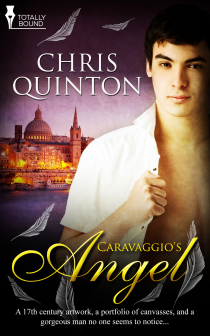
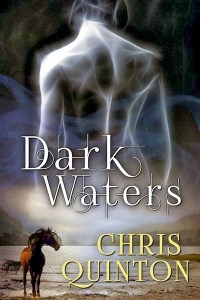
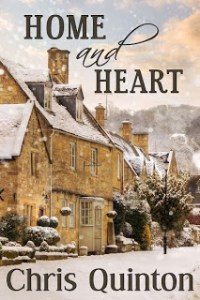
I’ve just had Caravaggio’s Angel published by Totally Bound – it’s a contempory paranormal set on the island of Malta – https://www.totallybound.com/caravaggios-angel. Also, having had a handful of titles revert to me from the currently rather troubled Silver Publishing, I’ve reedited them, found new covers and self-published them. Details can be found on my website http://chrisquinton.com

What are you working on at the moment?

Oh, goodness. My Work in Progress folder is stupidly long. Well, I’m co-writing Heat with RJ Scott, co-writing Against the Tide with Terri Beckett, working on Melusine’s Cats #1 Greymalkin, and I have edits to do on Undercover Blues for Manifold Press. Those are at the top of the list. Below them are at least half a dozen stories waiting to be worked on, all with titles and some with covers ready for self-publishing.

Please could we have an excerpt?

With pleasure *g*. Here’s a short clip from In The Dog House…

I pulled over at the first lay-by I saw, and after I’d let Spot out to stretch his legs and we’d taken it in turns to pee against the same tree, I got out my mobile phone, and was shocked to see it was gone ten o’clock. First I called Uncle George, to let him know where we were and that we’d lost our tail. He had news as well. Pete Mullins, Joe’s dad, had paid him a visit, told him he had two choices.
“Two? That was generous. Not. Is one option the same his thug of a son gave me?”
“Yup. Spot has to compete. But I sell him to them—for a sodding fiver, no less—and keep my mouth shut, or else.”
“What? The bastards! They can’t have him, Uncle!” Then caution set in. “Or else, what?”
“He didn’t say, but it doesn’t matter. You keep our Spot safe, you hear me? I’m taking him out of the race first thing in the morning.”
“But they want him to run,” I protested. “You’re taking a hell of a risk! You’re not going to give him to them, are you?”
“Don’t be daft! Of course not! Just lie low with him for a while—and keep your mouth shut! I think I can get us out of this as long as we don’t involve anyone else.”
“Meaning the police?”
“Exactly. I’ve got a plan,” he continued with a confidence I didn’t feel. “I saw it on a TV cop show and it’ll work for us. Just lay low and leave this to me.”

~~~ Chris Quinton ~ Writing Romance … Where Men Fall In Love With Men ~~~

My website is here http://chrisquinton.com/
and I’m on FaceBook here https://www.facebook.com/profile.php?id=100000894893197
Here is my Amazon Author Page https://www.amazon.com/author/chrisquinton
description here

description here

description here

description here

Read Full Post »

It’s been a while since I’ve done one of these so it was quite nice to be tagged by Sarah Granger, author of A Minor Inconvenience, one of my favourite historicals. You really need to check it out, okay?

I have four questions to answer about my writing process, which is quite hard because my process changes all the time. On this occasion I’m going to talk about a big partially completed, and currently stalled, project called A Fierce Reaping, about a troop of Romano-British cavalry fighting the Anglo=Saxons in post-Arthurian Northumbria and Yorkshire.

What am I working on?

A Fierce Reaping is based on Y Gododdin, a piece of poetry written in Old Welsh in about the 9th century though it deals with events that occurred at the beginning of the 7th century. I’ve got about 60,000 words of it so far, am halfway through and have the most difficult section – needing to kill off a lot of people – still to write. I wrote the first 50k words during Nanowrimo in 2011 and have added to it sporadically since but decided that it might be better to finish a few short projects rather than devote the couple of years I’d need to getting AFR finished and redrafted.

How does my work differ from others of its genre?

Less romance. Romance is not a genre I ever got into – I just upped the violence levels in the ‘bloke books’ I used to read. Westerns, fantasies, Age of Sail books, military thrillers, police procedural – all focussed on the action rather than the development of a loving relationship. I’ve nothing against romance, in fact I quite enjoy reading someone else’s, but in my writing process I get distracted from relationship angst and introduce the action adventure elements. In fact I’m usually MORE excited about the plot than I am about the romance when I’m reading too. I also don’t write much sex. I use it as a motivator, a reward, or a way of upping the stakes for the characters. BFFs get distressed when the other is in dangers; lovers get distraught! A Fierce Reaping should end up at about 100k words when I’m done and it will have 3 sex scenes. It doesn’t need any more to make the plot points I want to make and since I really don’t enjoy writing sex scenes – I mean I REALLY don’t enjoy writing them and the insistence of the M/M reading community that books with no explicit rumpy pumpy are a waste of pixels hurts my soul – I see no point in adding any more.

Why do I write what I do?

Firstly, choice. More choice in LGBTTQ fiction HAS to be a good thing. Yes I know that contemporary erotic fiction is the best seller but I’m petty certain that there are enough people out there who would enjoy the gay equivalent of Sharpe or Hornblower or James Bond – plot driven historical or contemporary stories with gay protagonists and maybe a little bit of sexiness – to make them worth writing. I don’t expect to sell well but I think it’s very important that the choice is there whether people buy it or not.
Secondly the shameful erasure from history of the tremendous contribution made to civilisation by LGBTQ people. Too often lives have been censored or bowdlerised to remove any reference to alternative sexuality. In most cases we’ll never know the true stories but we can make it clear in fiction that LGBTQ people were there and worked as hard, were as heroic and as competent as anyone else, but without the solace of being able to acknowledge their loved ones.

How does my writing process work?

Frankly it takes a while. I’ve never been one of those people who can read a prompt and a month later have a perfectly constructed first draft ready to polish for submission. In the case of A Fierce Reaping, it’s a story with which I have been familiar since reading it in translation 40 years ago. The actual poem is a series of death songs for warriors killed on a raid deep into territory held by the Saxons, so hardly a light and fluffy story but one of how pride and ambition lead an army to disaster. Atrocities occur on both sides and the climax is a bloody and tragic one.S o how to wring a happy ending from all that death and despair? I read the text again and figured out a way it might be done in about 2010. Then I wrote about Greeks and pirates instead and didn’t pitch into the Romano-Celtic period until late 2011. I read all the different translations of Y Gododdin I could get my hands on, refamiliarised myself with arms and armour, growing seasons, probable diets, the uber-macho death wish mindset of a culture that deemed it a grand and glorious thing to die in battle. Then it was November and I bashed out 53k words during a daily hour in the morning and another just before bedtime. They aren’t good words but they are there and I added another 10k over 2012 while I got a novella, a short story and a novel published. I was looking forward to carrying on with A Fierce Reaping in 2013 then I had to adjust my daily routines to fit around a newly retired husband and writing went out of the window.
Once a story has lost its impetus it’s very hard to get gong on it again. I find it very easy to go back and revise then find I’m doing a complete rewrite, and that’s a lot to commit to when only managing about 500 words a week, sometimes less. This spring I got my hands on a different translation of the base text that turned some of my ideas on their heads and had to do some replotting. I think the new version will hold water against all 4 translations and I’m looking forward to getting on with it again, but when it will be finished I have no idea. If it’s finished, when it will be published I have even less idea – I don’t know of ANY publisher now that Cheyenne is closing its doors who might be prepared to handle something like this.

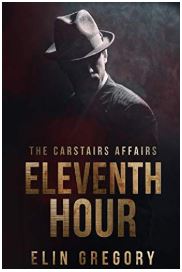
For the moment I’m concentrating on the second draft of Eleventh Hour, set in 1920s London, and am still waiting to hear whether Riptide wants A Taste of Copper, a story with an erstaz medieval setting loosely based on the Black Knight sketch from Monty Python and the Holy Grail. I keep promising myself that I’ll finish AFR when I have found a home for those, but I could say that about any of the half dozen novels on my had drive, some of which are almost complete. One thing at a time is a lesson I have only recently learned.

Since I have to pass on the baton to other writers I asked for volunteers and Mia Kerrick, Elliott Mackle and R. S. Charles responded. They will be posting their writing process pieces on Monday, May 19th. Links later.

Read Full Post »

From the beginning of next week I’ll be posting interviews with authors who have contributed to the Not Quite Shakespeare anthology from Dreamspinner Press.

All the stories are British themed and are written by a terrific mix of established authors and those still striving to make their mark.

Could anything be more British than afternoon tea?

Tune in next week to find out what inspired them, what they have already published and what we still have to look forward to.

I’ll be offering a copy of the anthology to a commenter to any of the interviews so don’t forget to chip in.

Read Full Post »

A to Z challenge *sigh*

I totally failed at this year’s A to Z challenge. It’s not that I wasn’t interested or motivated or ran out of ideas. I had been sufficiently organised to make myself a list of things to write about. No, I just ran out of energy.

So Q to Z will have to wait for next year. Sorry guys.

Read Full Post »


As last year, just click on the image to the left to be taken to the A-Z website and links to other blogs taking part. Good luck to everyone and I hope the inspiration keeps flowing.

~~~

Pilgrim

Depending on your background and/or ethnic origin, very different images spring to mind when seeing the word ‘pilgrim’. When I Googled for an illustration for the word I was shocked at how many cartoons and photos there were of people in inaccurate pseudo-17th century dress because I just don’t associate pilgrim with Pilgrim Fathers.

Pilgrims exist in every age, country and religion, and since pictures speak a thousand words I’m going to let Google image do the talking for me. Here are a few pictures from around the world. I’ve tried to choose pretty ones.


Medina in Saudi Arabia


Lourdes in France


Santiago de Compostela, Spain


Ynys Enlli off the north coast of Wales where the soil is “made from the bones of a thousand saints”!


Tai Shan, a sacred mountain, in China


One of forty thousand pilgrims bathing in the sea at Gangasagar.

Read Full Post »


As last year, just click on the image to the left to be taken to the A-Z website and links to other blogs taking part. Good luck to everyone and I hope the inspiration keeps flowing.

~~~

Ogilby

This handsome chap with his periwig and modest collar is John Ogilby, a man who reinvented himself whenever necessary and who seems to have been a roaring success at whatever he tried.

Born in Scotland in 1600, he had to support his family when his father was imprisoned and did this by firstly winning a lottery, then by using part of the money to apprentice himself to a dancing master. He was soon good enough to open his own studio but was rendered penniless again when he was injured while performing. Using his contacts he found a place as a dancing tacher with The Earl of Strafford who took him to Ireland and sponsored him in starting Irelands first theatre. Ogilby became a theatre impresario until the rebellion of 1641, got involved in the fighting, escaped an exploding castle and was shipwrecked as he fled Ireland.
He arrived in England penniless again, walked to Cambridge and decided to learn Latin. He so impressed the scholars that they taught him for free and in 1650 published a translation of Virgil that netted him a small fortune. Ogilby decided to give Greek a go next. Looking ahead, he started a publishing business to print his own books and his illustrated translations of Aesop and Homer became all the rage.
Once Charles II was on the throne, England, and Ireland was ready for the theatre again so Ogilby returned to Dublin, built a new theatre and wrote music for the plays. With that endeavor a success, for once, he returned to London to start a new publishing venture and had a bright idea. With the help of some of the finest artists and engravers of the time he made the Britannia, Britain’s first road atlas. Despite losing almost everything, again, in the Great Fire of London, he rebounded and at the age of 74 was appointed “His Majesty’s Cosmographer and Geographic Printer”!

So how many careers was that? Dancer, dance teacher, theatre manager, student, scholar, translator, publisher, writer of show tunes, geographer, and finally publisher by appointment to His Majesty the King.

I find his road maps particularly interesting because they just show the road and what one might encounter along it, although he took some artistic licence with the depiction of the more picturesque bits of scenery. This is the one for where I live.

PS just noticed I got the date wrong on this one, which should have appeared yesterday, so you’ll get another later tonight.

Read Full Post »

Boy, do I feel special! Not only do I get to reveal the cover of a long anticipated novel but it concerns one of my favourite military campaigns! I’m so looking forward to reading this book.

Well what do you think?

There’s so much to love in this image. I could talk about all the little details in it all day. Congratulations to J P Kenwood on such a super cover and kudos to artist Fiona Fu. It’s brill!

Here’s the blurb:

Dominus by J P Kenwood

In AD 107, after a grueling campaign against Rome’s fierce enemy, the kingdom of Dacia, Gaius Fabius returns home in triumph. With the bloody battles over, the commander of the Lucky IV Legion now craves life’s simple pleasures: leisurely soaks in fragrant baths, over-flowing cups of wine, and a long holiday at his seaside villa to savor his pleasure slaves. On a whim, he purchases a spirited young Dacian captive and unwittingly sparks a fresh outbreak of the Dacian war; an intimate struggle between two sworn enemies with love and honor at stake.

Allerix survived the wars against Rome, but now he is a slave rather than a victor. Worse, the handsome general who led the destruction of his people now commands his body. When escape appears impossible, Alle struggles to find a way to preserve his dignity and exact vengeance upon the savage Romans. Revenge will be his, that is, if he doesn’t lose his heart to his lusty Roman master.

Dominus is a plot-packed erotic fantasy that transports readers back to ancient Rome during the reign of the Emperor Trajan. This is the first book in an alternate history series—a tumultuous journey filled with forbidden love, humor, sex, friendship, political intrigue, deception and murder.

Dominus will be released on Smashwords and Amazon on April 21st! No buy links yet available but follow JP on Facebook and Tumblr to be the first in line.

Read Full Post »


As last year, just click on the image to the left to be taken to the A-Z website and links to other blogs taking part. Good luck to everyone and I hope the inspiration keeps flowing.

~~~

Mamluk

Busy day today so I have picked a post that I can illustrate a lot.

Mamluks were the enslaved soldiers who served the Caliph in Persia, then in other countries, most notably Egypt. They were property but treated well and encouraged to compete for advancement. I find the set up interesting because it shows how a train of thought can be repeated. Local soldiers may have their own loyalties to family, tribe, governor but displaced persons far from home for whom compliance can reap huge benefits are far more likely to be devoted to the provider of those benefits.

Caligula and Nero chose Germanic slaves to form their body guards, and the Emperors of Byzantium had their Varangian guard, the Mamluks were selected from the strongest Georgians, Circassians and Kipchaks to be loyal to the Caliph and him alone.

As a military grade they were one of the longest lived organisations, existing from the 8th century AD until the early part of the 19th century.

Mamluk from Aleppo painted by William Page some time between 1816 and 1824.

Mamluk heavy cavalry armour c. 1550, bearing a resemblance to the armour used by the Sarmatians.

The last of the Mamluks – Roustum Raza, painted around 1793 by Vernet. Roustam was born in Tblisi and was purchaed as a body guard and personal attendant by Napoleon Bonaparte during the French invasion of Egypt. Roustam stayed with Napoleon until his death on St Helena, when he returned to France and settled in Dourdan. He died there in 1845 at the age of 61 or 62.

Read Full Post »


As last year, just click on the image to the left to be taken to the A-Z website and links to other blogs taking part. Good luck to everyone and I hope the inspiration keeps flowing.

~~~

Limey

Limey is a slang term, often pergorative, from Australia, New Zealand and South Africa applied initially to any British seaman and later to any Brit.

This could be because they were small and green by the time they got off the boat in Cape Town, Sydney or Wellington but it isn’t. It’s because of these:

In the 18th and 19th centuries limes saved as many lives of British naval personnel as penicillin did in the 20th century.

These small green fruit not only add a pleasant tang to grog but their high vitamin C content kept the dreaded scurvy at bay. Scurvy is a disgusting disease, debilitating, painful and unsightly, were the collagen forming connective tissue in humans begins to break down. Painful joints hamper movement, swollen and receding gums cause tooth loss. The patient is exhausted, emotionally unstable and eventually the internal organs begin to break down. And it began to affect the crew fast. Naval records show that on a six week tour of duty almost three quarters of the men would show signs of the disease if they had no access to fresh food.

It wasn’t until 1930s that we really got a handle on what causes scurvy and how it can be successfully treated, but long before that people had developed ways of handling it. Hippocrates described the disease in the 4th century BC and prescribed green vegetables as a cure. In the British navy it wasn’t all rum and flogging. Some captains were very concerned about their men and tried all kinds of cures, but it was found that citrus fruits, which were easy to transport and would stay good for a long time, were the best treatment. Imagine the atmosphere on the ship where the captain experimented with feeding his men large amounts of cabbage!

In 1753 naval surgeon James Lind published his Treatise of the Scurvy, recommending that limes be carried on all naval ships. The British Naval ignored his findings officially for several decades but individual captains followed the advice and once it had been proven to work the authorities began to provide limes or limejuice to all their ships.

And not just ships. I remember my grandfather telling me how his platoon was provided with crocks of lime juice during the Great War when they were in Palestine [and how one night the commissariat accidentally gave them the stone jar full of whisky that had been decanted for the officer’s mess].

So soldiers, sailors and all kinds of travellers in hard places can thank the humble lime. Being called Limey is a small price to pay for keeping your teeth in your head.

Read Full Post »


As last year, just click on the image to the left to be taken to the A-Z website and links to other blogs taking part. Good luck to everyone and I hope the inspiration keeps flowing.

~~~

Jam

Throughout history mankind has had a sweet tooth and has pondered the best method of ekeing out the glut of summer fruit to use during the lean months. Jam was just one of many ideas, but it is a successful one.

However, today I won’t talk about history. Today I will give you a fully illustrated recipe showing the type of jam you make when you aren’t quite sure what else to do with the ingredients

A picture heavy post so I will cut, but first meet the marrow:

This is what happens if you don’t pick courgettes/zucchini for a few days. I put the mug in for scale.

Read on for my patent Marrow and Ginger Jam. (more…)

Read Full Post »

« Newer Posts - Older Posts »