Blurb
Pierce is homeless.
Young and strong-willed Pierce has been living in the streets of New York City for six months, since his parents kicked him out of their perfect, Christian, suburban house. Pierce is gay. And he is suffering the consequences for being true to himself.
Rafe is homeless.
He is also sick. Impressionable, but far from innocent, Rafe ran away from home almost a year ago. His sickness is slowly killing him. But Rafe is not a hopeless case. He has learned to get by. Nights of paid passion turn to sheltering warmth from the imminent New York winter.
And then there’s a suitcase. Pierce’s suitcase, which holds secrets from everyone including its owner.
When their worlds collide, their lives intertwine and when the world seems bent on bringing the two souls to their knees, fate has other plans for them.
Caution: Contains adult language, New York City streets, tough life choices, sexual tension, stubborn brutes and swoon-worthy romance.
About The Author Chris Ethan is a book whore. He enjoys selling his feelings for money and other pleasures and is blatantly unashamed to do so for as long as he breathes. Chris Ethan is also a persona for Rhys Christopher Ethan, author of fantasy and sci-fi. He uses Chris Ethan to share stories of adult queer romance with those who need it. Before you delve into his books however, be warned. He likes putting his characters through shitstorms and hates anything conventional. But then there’s that darned happy-ever-after. Also, he likes swearing. Deal with it!
Sometimes it’s really worth checking out backlists. There are some marvellous books out there but with hundreds of new titles every week it can be very hard to find them. Authors – have you got a title a year or more old that could do with a little love? Readers – have you got a favourite book that you think deserves some attention?
This week I’m hosting an old friend, both book and author 🙂 When I started reading m/m I stuck very carefully to historicals only with just the occasional dip into other genres. Branded, then the two Gold Warrior books, was one of my first excursions out of my rather narrow little comfort zone 🙂 I really enjoyed the adventure and physicallity of it, and it was surprisingly sexy too [you have to bear in mind that I’m a bit tone deaf to erotica and things that have other people fanning themselves and demanding cold showers leave me scrolling on to find where the plot picks up again]. So this book is both fun and a great adventure and has recently been reissued as a one volume edition.
Blurb:
Maen is a Gold Warrior, an elite defender of Aza City, respected by his fellow soldiers and favored by his imperious Mistress for services both in and out of the bedchamber. His loyalty and commitment are unwavering until he recruits Dax, a captivating and challenging Bronzeman who, despite his youth and inexperience, seduces Maen with his fierce hero worship. When they’re captured by enemies of the City, Maen risks everything to save Dax: his position, his faith, and even his life. But he loses his lover to the rebels and upon his return to the City is stripped of his rank.
In Aza, where a soldier’s only lawful devotion is to the City and his Mistress’s pleasure, the disgraced Maen is placed under the watchful guard of the arrogant Gold Warrior Zander and relegated to preparing a Royal History for the new Queen. But his discoveries cast a new and shocking light on the past and threaten to stir revolution in both citizens and rebels. With the help of the lively and inquisitive scribe Kiel, Maen initiates a chain of events that will change their world forever—and offer him the chance to regain both his honor and his heart’s desire.
Bio:
Clare took the pen name London from the city where she lives, loves, and writes. A lone, brave female in a frenetic, testosterone-fuelled family home, she juggles her writing with her other day job as an accountant.
She’s written in many genres and across many settings, with award-winning novels and short stories published both online and in print. She says she likes variety in her writing while friends say she’s just fickle, but as long as both theories spawn good fiction, she’s happy.
Most of her work features male/male romance and drama with a healthy serving of physical passion, as she enjoys both reading and writing about strong, sympathetic and sexy characters.
Clare currently has several novels sulking at that tricky chapter 3 stage and plenty of other projects in mind . . . she just has to find out where she left them in that frenetic, testosterone-fuelled family home.
I read this story many years ago, but it lingers in my mind as a breath of fresh, vibrant air. It’s a sophisticated blend of murder mystery, the study of amnesia, and the broken relationship between two passionate men. There are no concessions to a romantic trope in sight, and the men are emotionally apart for much of the book. It’s ambitious in that it covers many years of their lives, both together and apart, through flashback and current events. It doesn’t shy away from depicting characters with a realistic, pragmatic and sympathetic range of flaws. They love, they care, they’re rash, they make mistakes both mild and major, they’re in pain for a lot of the book. Good grief, I can feel my throat closing in empathetic tension, just thinking about re-reading it!
That said, please stick with it! Through the anguish comes reward, for the characters and the readers. It’s the perfect mix for me: the struggle that makes the story a real life tale, but with the hope and eventual restitution that can be created in fiction. And blended with a well-drawn cop mystery? I was in heaven!
The prose is rich and rewarding, the dialogue excellently and plausibly drawn for all and every character, primary or secondary. I literally was hanging onto each word to find out what came next. And I was rooting for everyone’s peace and reconciliation, whatever their stumbling along the way.
I was even inspired to review on Goodreads, a rare event for me, Ms Lazy :D.
“A depth and richness that I haven’t found in a book for a long while. Anguished relationship, quirky and poignant use of the memory loss, sexy characters, lovely descriptions of and compassion for the characters’ development and redemption. Good pace, evocative settings.”
Thanks for the opportunity to revisit this title. I even discovered there’s another book in the same setting, but it doesn’t seem to be freely available at the moment. I’m off on the quest right now!
I am ridiculously British. To the point where even in my writing, it is glaringly apparent that I have spent the vast majority of my life on this damp cluster of rocks in the middle of a not especially welcoming sea. I even have, when I’m being all posh and shit, a BBC accent.
No prizes for guessing my writing’s like that too.
I am also bred from northern slum stock: my father remembers being moved out of the tenements after his four-year-old sister jumped out of bed and landed in the flat downstairs. Having more than two types of vegetable in a meal is ‘fancy’ and any meal without meat is a disappointing snack. And the only acceptable foreign food is curry.
The majority of me, including my author voice, stems from this upbringing. I don’t write the millionaire-meets-the-hooker trope, because a romance between the local drug dealer and a copper’s son is infinitely more interesting to me, especially the characters that would have to be involved. I love every minute of Red Dwarf, because the hero is a Scouser space bum who spends his existence playing the guitar (badly), riding around the ship on a dirty space bike (badly), and point-blank refusing to admit that his crewmates are his friends (badly). Because, you know, blokes. Not good at this emotional stuff.
Being British, I would never say ‘I love you.’ The nearest might be, ‘Yeah, well, you’re alright, I suppose.’ I would also never say ‘I hate you’ – that is measured on the scale from ‘he’s a bit of a knob’ to ‘he’s an absolute fucking cunt.’ The sentiment is there, but the words aren’t.
And that makes writing in a British voice both very difficult, and very fun. You’re massively open to misinterpretation of what you and your characters mean. What is affectionate between two British lads can often be viewed as rude, aggressive, hostile or even violent by outsiders. Show and not tell becomes not just a writing tip, but a writing necessity if you want your readers to follow the story, like the right characters, or even recognise subplots for what they are. It’s bloody hard, old bean.
But if you are like those lads, it can be very funny to watch the outsider struggling with what in the hell to do when they can’t read the situation. I’ve seen plenty of people on my Facebook struggling when I and another Brit – or even I and some of the most awesome non-Brits who really get this shit – start sounding off at each other. One of my oldest friends is a lad from Iowa with an intensely British sense of humour, and I’ve lost count of the number of times people have been thrown by our rude, aggressive, and very friendly and entertaining slanging matches. It’s hilarious, in a vicious little way, and something I do enjoy triggering on boring Sunday evenings.
It might not look like it but everyone’s having so much fun!
With Spy Stuff, I had an opportunity you might not expect out of a transgender character: I got to channel that entertainment.
Sure, Anton is firm in his identity as a boy. He knows what he is. But he’s also very new to other people identifying him as a boy. Because social transition isn’t just a transition in how a person presents themselves but, as a natural consequence, how others treat them. And as we all remember from being kids ourselves, boys and girls often act very differently in the presence of the other. So Anton’s a bit lost when it comes to the other boys for a while – is this friendly? Is this okay to join in with? Is he going to react in a way a girl might, and be teased or even found out for it?
And as the writer, I have to say, I enjoyed the shit out of those scenes: Anton watching warily from the sidelines while a personality smorgasbord of madcap British kids went for each other for…well, no real reason. From the habitual book-throwing at each other in morning registration to the technique of expressing happiness at the football results by jumping on each other, Anton is initially hesitant to join in for fear of reading the situation wrong, and being caught out.
In doing so, I found I’d managed to show one of the biggest lessons I’ve learned from my own experience in transitioning: sometimes, acceptance won’t be found in the crowd with rainbow flags on their profile pictures and who can recite the entire alphabet soup…but rather in the daft, insulting, aggressive, volatile clusters of idiots who don’t damn well care what you are, as long as you don’t support Manchester United.
About the Book
Anton never thought anyone would ever want to date him. Everyone knows nobody wants a transgender boyfriend, right? So he’s as shocked as anyone when seemingly-straight Jude Kalinowski asks him out, and doesn’t appear to be joking.
The only problem is … well, Jude doesn’t actually know.
Anton can see how this will play out: Jude is a nice guy, and nice guys finish last. And Anton is transgender, and transgender people don’t get happy endings. If he tells Jude, it might destroy everything.
Matthew is an asexual, transgender author dragged up in the wet and windy British Isles. He currently lives and works in West Yorkshire, and has a special fondness for writing the rough-edged British working class society in which he grew up — warts and all.
He roams mainly on Twitter and Facebook, has a free fiction page, runs a blog chronicling his own transition from female to male, and has a website. His young adult backlist can be found on his JMS Books author page. And as a last resort, he can also be contacted at mattmetzger@hotmail.co.uk.
An Excerpt from Spy Stuff
Anton slowly relaxed as Jude started to brighten up and just … talk. Jude chattering, Anton was starting to realise, was a sign that everything was alright. And Anton desperately wanted it to be, so he simply clung on to Jude’s hand — even though it was raining outside, and really too cold to not be wearing gloves — and let the noise wash over him all the way home.
Which meant, when he let them into the house and the smell of Aunt Kerry’s drunk spag bol invaded their clothes, Anton was … actually in kind of a good mood. Maybe he could do this. Maybe Jude would listen, even if in the end he still decided dating a trans guy wasn’t for him? There was a chance, right?
So when Lily appeared in the doorway, took one look at Jude, and screamed, Anton laughed.
“What the hell!” Jude yelped as she tore back into the kitchen.
“She’s –”
“Mummy, Anton’s friend’s on fire in the hall!”
“– kinda weird.”
“No shi — er, hell?”
“Just ignore her,” Anton advised, hanging up their coats. A nervous swoop made itself known when Jude grinned and kissed his ear, but he laughed it off and pushed him in the direction of the kitchen. “Go get us drinks or something.”
“It’s your house,” Jude said, but wandered off obediently. Anton took a moment to simply breathe before following him.
Lily had firmly decided — despite having seen Jude before and not having really clocked his hair — that Jude was on fire, and Anton had to wrestle a cup of water away from her before it ended up on Jude’s head.
“Nooo, give it back!” she wailed, stretching up to grab his belt as he put the cup in the sink and rummaged in the fridge for Cokes.
“Yeah, Anton, give it back. I might start melting the counter,” Jude said, sliding onto one of the stools at the island counters. Aunt Kerry, busy with dinner, simply chuckled at the both of them.
“You’re being mean!” Lily yelled, stamping her foot, then turned on Jude, skidding across the tiles to grab at his trousers. “You need a fireman!”
“It’s always that colour,” Jude said in a serious voice, but he was wearing an ear-splitting grin, and Anton’s heart clenched hard at the sheer beauty of him, despite the battered face.
“No, it’s on fire!”
“No it’s not,” Jude said. “It’s ginger.”
“That’s not ginger, ginger biscuits are ginger!”
“They’re brown.”
“If they’re brown,” Lily said seriously, “then why are they called ginger biscuits, huh?”
“Because they have ginger in them.”
“Which makes them ginger and that’s not ginger and you’re on fire!”
“Lily, leave Jude alone,” Aunt Kerry interjected.
“Jew?”
Jude dropped his head onto the counter with a muffled cackle into both hands, and Anton couldn’t help but laugh at sight of him. “Oh God,” he said. “Come on, let’s go into the living room, and –”
“Noooo, you can’t, he’ll put the living room on fire!”
“Lily, seriously, stop it with the fire, he’s not on fire.”
“Jew!” she screeched, and Jude did a full body twitch like he was trying not to curl in on himself. “Jew!”
“Jude!” Anton corrected.
“Jude,” she echoed scornfully, throwing Anton a fabulously dirty look for a kid who wasn’t even six yet. “Jude!”
“What?” Jude managed, coughing and rubbing at his eyes, still grinning.
“Tell Tasha to stop it!”
Anton froze. Like a bucket of ice water being dumped on his head, every muscle seized up, and the Coke in the cans started rattling in his shaking hands. “Lily! Stop it!” Aunt Kerry barked, but Jude — oh God, Jude, totally oblivious Jude —
“Okay,” he said. “Who’s Tasha?”
Lily blinked, then flung her arm out, and pointed right at Anton. “Anton’s Tasha,” she said, like it was so obvious.
“Lily, that’s eno –”
“Anton was Natasha only then she became Anton and Mummy says I have to say he but I forget sometimes,” Lily continued in a loud, inescapable voice. It bounced off the walls and tiles, and one of the cans slipped through Anton’s hands and burst open on the floor. Coke was flung everywhere in long, fizzy bursts, soaking his socks and trousers, and through Lily’s indignant shriek and Aunt Kerry’s yell, all he could see was — was —
Jude.
The wide-eyed, confused stare that Jude was giving him. And the single word, that word, the word Anton hated.
“Natasha?”
Anton opened his mouth, found nothing coming up to save him, and did the only thing possible.
Sometimes it’s really worth checking out backlists. There are some marvellous books out there but with hundreds of new titles every week it can be very hard to find them. Authors – have you got a title a year or more old that could do with a little love? Readers – have you got a favourite book that you think deserves some attention? Message or email me and we’ll set something up.
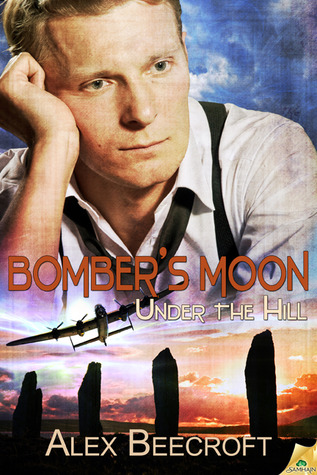
My guest today is Alex Beecroft and I’d like to show a little love for her fantastic fantasy series Under the Hill. These two substantial books actually form one continuous very long novel so buy both and set time aside to wallow. Peopled with a band of very memorable characters, immersed in the beauty an perils of British folklore and with heroes I could really root for, these books were just about my favourites of the year of their issue. Great stuff.
The faeries at the bottom of the garden are coming back—with an army.
Fight a fire-breathing dragon with a wooden airplane? It’ll take a madman…
Check out the series links for the blurbs.
Bio:
Alex Beecroft was born in Northern Ireland during the Troubles and grew up in the wild countryside of the English Peak District. She studied English and Philosophy before accepting employment with the Crown Court where she worked for a number of years.Now a stay-at-home mum and full time author, Alex lives with her husband and two children in a little village near Cambridge and tries to avoid being mistaken for a tourist.
Alex is only intermittently present in the real world.She has lead a Saxon shield wall into battle, toiled as a Georgian kitchen maid, and recently taken up an 800 year old form of English folk dance, but she still hasn’t learned to operate a mobile phone.
Alex writes queer romance – that is, her main characters are typically gay, bisexual, transgender, pansexual or asexual men. Best known for historicals, she also writes Fantasy/SF and contemporary romance.
She is represented by Louise Fury of the Bent Agency.
I asked Alex for a recommendation and this is what she said:
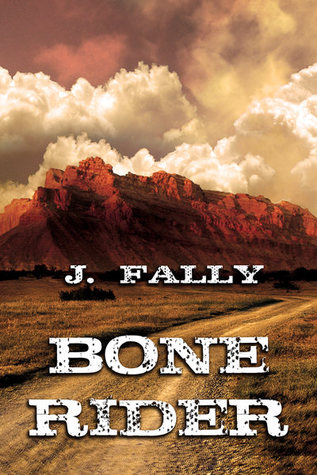
Bone Rider by J Fally as my backlist book. It’s a really original sci-fi thriller in which a young man fleeing from his Russian Mafia lover accidentally bonds with some sentient alien armour and then has to spend most of the book fleeing from the army as well. The concept is great fun, the action is breathless and the heat level is scorching.
Sometimes it’s really worth checking out backlists. There are some marvellous books out there but with hundreds of new titles every week it can be very hard to find them. Authors – have you got a title a year or more old that could do with a little love? Readers – have you got a favourite book that you think deserves some attention? Message or email me and we’ll set something up.
My guest this week is R J Scott and I want to show a little love for her backlist title The Gallows Tree. This is a gentle romance with an American adrift in the green peace of England, an historic house in need of restoration and a creepy paranormal twist. Great fun with a few little chills.
Blurb:
Cody Garret is only just finding his way after an abusive relationship ended with his ex in prison. Coming to England to restore Mill Cottage is his way of running so he has time to heal. His goal is simple-hire a company to help make the mill cottage saleable then go back to the States.
What he doesn’t count on is meeting Sebastian Toulson-Brown, the brother of his contractor and the man who may be able to show him he can stop running.
But first Cody and Sebastian must deal with the ghosts of lost loves and the destinies that are woven into the story of the mill and the sycamore trees that stand on its land, one of which might be the gallows tree.
Excerpt:
Lower Ferrers. Please drive carefully.
A big speed sign with a 30 in the middle and another warning for horses sat directly under, and he immediately lifted his foot off the gas until he was driving at more like half what the limit was. He wanted to remember every image of the next few minutes of his life. He had finally arrived at the place his mom’s gran, his own great-gran, had left at the end of the war as a Yankee bride. The long curve of the road ran through dense trees that formed an arch of fall golds and browns over his head, and then suddenly, the village was laid out in front of him.
He couldn’t just drive in. He needed to stop and think about this final step. What if this was all wrong? This could be the worst decision of his life. What the hell did he know about renovation? He indicated and pulled off to the side of the road just past the signs and onto a widening in the narrow road next to a gate into fields. This was the England his great-gran had spoken about.
The village was stunning. Beautiful. Old houses with crooked roof lines staggered drunkenly up the road all built in a soft weathered brown and gray stone. Each had a chimney and seemingly randomly placed windows. Cody counted six of these cottage-style houses and above them the top of twisted chimneys on a far grander building. Great oaks and sycamore trees, now with leaves of fall gold and red, towered over the cottages and the twisting road that followed their path upwards. Cody listed adjectives in his head. This was much better than green. This was an idyllic, picture-postcard place, and it was everything he had ever been told about this English village. On the opposite side of the road was a larger dwelling, and he saw the sign outside that proclaimed it as the Ferrers’ Arms.
The inn with the slate roof was where he was staying with an open-ended booking. He didn’t know how long his stay would be. It could be a month or it could be the full six months. When he moved on depended on so many factors, not least of which was having somewhere to move to. He had a strange feeling inside, and he realized it was a sudden and renewed sense of enthusiasm.
Panic and fear still clung tight in his chest, but his breathing was steady, and the sounds of the village—sheep in the field, horses, birds—and the perfect stillness of the fall sky was utter peace. He closed his eyes and breathed deep. One minute he had been on the highway to hell, and within an hour, he was in the quiet and calm of a village that had been here for centuries. What was it people said? Stepping back in time or something like that. Standing here it certainly felt like he was entering another world.
Was it possible that by his arrival here in the village where his family had roots he was taking a controlled step away from his past rather than running blindly?
Bio:
My goal is to write stories with a heart of romance, a troubled road to reach happiness, and most importantly, that hint of a happily ever after.
I’ve has been writing since age six, when I was made to stay in at lunchtime for an infraction involving cookies and the mixing bowl. You can’t tell a six year old not to lick the bowl!
I was told to write a story and two sides of paper about a trapped princess later, a lover of writing was born.
As an avid reader myself, I can be found reading anything from thrillers to sci-fi to horror. However, my first real true love will always be the world of romance. I love my cowboys, bodyguards, firemen and billionaires (to name a few) and love to write dramatic and romantic stories of love and passion between these men. (Yum)
With over 90 titles to my name and counting, I am the author of the award winning book, The Christmas Throwaway, which was All Romance Ebooks best selling title of 2010.
I’m also known for the Texas series charting the lives of Riley and Jack, and the Sanctuary series following the work of the Sanctuary Foundation and the people it protects.
I’m always so thrilled to hear from readers, bloggers and other writers. Please contact via the following links below:
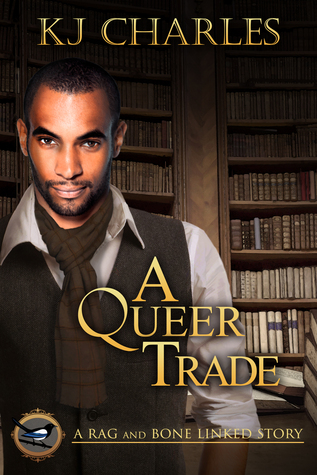
It’s not long to wait until Rag and Bone is out – a full length novel set in the Magpie world and featuring brand new protagonists but as a lovely little taster, here is A Queer Trade, introducing Ned and Crispin and a brand new type of magic.
Apprentice magician Crispin Tredarloe returns to London to find his master dead, and his papers sold. Papers with secrets that could spell death. Crispin needs to get them back before anyone finds out what he’s been doing, or what his magic can do.
Crispin tracks his quarry down to waste paper dealer Ned Hall. He needs help, and Ned can’t resist Crispin’s pleading—and appealing—looks. But can the waste-man and the magician prevent a disaster and save Crispin’s skin?
A 16,000 word story set in the Charm of Magpies world, and a prequel to the novel Rag and Bone (March 2016). This story was first published as part of the Charmed & Dangerous anthology.
Excerpt:
Ned Hall, waste-man, was not enjoying his day.
He was generally happy in his work. It wasn’t a job for the weak, heaving waste down narrow stairs and hauling the handcart over cobbled or rutted streets, and after a while you could never get the paper dust out of your skin, but he liked it. Liked dickering over ha’pennies, liked seeing the odds and sods that came up in the piles, and mostly liked being his own master, a very long way from the docks.
It was a good life. A queer trade, to be sure, selling on psalters to wrap pork in, or dead men’s love letters to go round an ounce of baccy, but it suited him. So it was impossible to say just what was wrong now.
Ned pulled at his ear, scratched inside it with a finger. He’d done that so often it was beginning to feel sore, but he couldn’t stop, because he couldn’t shift the feeling that he could almost, not quite, but maybe, if he could just turn his head the right way, hear something.
Except there was nothing there to hear, and it was driving him to Bedlam.
He clapped both palms to his ears, gave them a rub so vigorous that he felt they might come clean off, and was engaged in that undignified act when a knock came from behind.
“Mr. Neddy Hall?”
Ned turned to look, and blinked. A gentleman, of sorts, stood in the doorway, in a tentative sort of way, like he was trying not to be there. A flash sort, dandyish clothes. Slim, no great height, or age either: about twenty, Ned reckoned. A narrow, nervy sort of face, and a head of hay-coloured hair, that yellow-brown shade.
“That’s Ned, if you don’t mind. Something I can do for you, sir?” The ‘sir’ was for the clothes, mostly: there was something about the way the visitor stood, hip tilted and weight on one foot, that didn’t say authority.
“Um, I’m trying to find some waste paper. Can you help me?”
Ned spread his arms wide, an invitation to look around that the young man took up, reddening as he grasped the silent point. The small room was paper from floor to ceiling, great piles and drifts of it, mounds of the stuff, white and yellow and browning, plain and printed and scrawled upon, a few bundles bound with string, most loose.
“You want waste, I’ve got it. How many hundredweight?”
“I mean, some specific paper,” the young man said, a little reproachfully, as if Ned should have known that. He had a trace of one of those country accents that sounded like a stage pirate talking, so you could hear the r in ‘paper’. “My ma— My, uh, teacher died and the house was cleared while I was away. They sold a lot of papers they shouldn’t have and they wouldn’t tell me where they sold them, and I have to find them. It’s terribly important.”
His eyes were wide and pleading, Ned observed, but the greater part of his brain was taken up with the observation that the toff talked like a molly. Not like the Cleveland Street boys, or anything. Just, a light voice that danced a bit and put a lot of stress on a few words, the sort of voice that made you think, I know your sort.
And the molly knew he knew, because the colour swept across his pale skin. “Can you help?” he asked, and there was an obvious effort to go a bit more manly there.
“What name?” Ned asked.
“Uh, Tredarloe. Crispin Tredarloe.” The young man did something Ned would never have predicted: he stepped forward and put out his hand. “Pleased to meet you, Mr. Hall.”
My guest today didn’t just contribute stories to the anthology but also edited it, so we owe her a great vote of thanks. Please join me in welcoming Julie Bozza.
Hi Julie, thank you for answering my questions.
What inspired you to write your stories for the anthology?
I was very interested in exploring the differences in how the war affected GLBTQI people. Of course many of their experiences would have been the same as anyone else’s, such as food shortages, and so on. But there must have been impacts on them that the ‘general’ population wouldn’t have felt, or not in the same ways.
Could you tell me a little about them?
I ended up being greedy and writing two stories! One is about an intersex person who has been raised as a man, and strongly identifies as a man – and he is keen to enlist, not only for patriotic reasons but to prove himself. His lover knows what a difficult time he would have of it, but then it would also be difficult to stay at home for no obvious reason.
The other story is about a woman who is enjoying the freedom and independence of being able to work while the men are away at war – but she’s also taking advantage of the lonely wives left behind. I wanted to explore how the war allowed women to spread their wings in taking on greater responsibilities – though my main character is guilty of perhaps taking that a little too far.
Could you please tell me about your other work?
Thank you for asking! I have 10 novels published now, and one anthology of my own, as well as A Pride of Poppies. They are a bit of a mixed bag, in that some are very much romances (Butterfly Hunter) while others are more gay fiction (Mitch Rebecki, Albert J Sterne), with one alternate history thrown in for good measure (about the poet John Keats and his last months in Rome). My focus has mostly been on male-male relationships, ever since I started writing about thirty years ago. I am feeling the need to spread my wings a little wider, though, to include more letters from the GLBTQIA quiltbag in my writing. I’m probably the person most interested to see where that takes me!
What are you working on at the moment?
I have just started a sequel to The Apothecary’s Garden – which I hadn’t planned. I was sure I had told their whole story! But Hilary and Tom have stayed with me all this time, and I can see there are still many things to explore about their relationship as they start ‘coming out’ as a couple.
Please could we have an excerpt?
This is the start of story about Lena, the ‘Lesbian Lothario’, in the Poppies anthology.
Lena flew along the lane on her bicycle, knowing just what strength was needed to maintain her speed, just how fast she could take that next turn. The air was bracingly fresh in her face, tugging strands of her hair loose as it always did no matter how carefully she pinned it up in the grey light of early morning. She wore trousers, close-fitting and cropped short around her calves so she didn’t have to worry about them catching in the chain. There were still eyes in the village that looked askance at this despite her boots and socks demurely covering her ankles. Lena grinned to remember old Mr Bailey staring at her with a thrill of disapproval only yesterday – as if he hadn’t had months to get used to her doing this work and dressing accordingly. As if he hadn’t known her and her family’s tendency towards contrariness all the days of his life.
The woods on her left veered towards the road as she sped along, thickened, loomed and then leapt across it with overarching branches. Lena coasted through the tunnel of green shade, and then followed the road around the curve, steering with little more than a perfectly-judged lean to the left. Then she stood on the pedals to power down the last straight and back into the sunshine, before taking a sharp turn down a side road and at last arriving at Amy’s gate.
— Author Bio:
Julie Bozza is an English-Australian hybrid who is fuelled by espresso, calmed by knitting, unreasonably excited by photography, and madly in love with John Keats.
A Pride of Poppies – an anthology from Manifold Press
Modern GLBTQI fiction of the Great War
Ten authors – in thirteen stories – explore the experiences of GLBTQI people during World War I. In what ways were their lives the same as or different from those of other people?
A London pub, an English village, a shell-hole on the Front, the outskirts of Thai Nguyen city, a ship in heavy weather off Zeebrugge, a civilian internment camp … Loves and griefs that must remain unspoken, unexpected freedoms, the tensions between individuality and duty, and every now and then the relief of recognition. You’ll find both heartaches and joys in this astonishing range of thought-provoking stories.
If you know the name of this terrific artist please let me know so I can add credit.
My guest today is Jay Lewis Taylor, a historical novelist whose works are shouldering their way to the front of my TBR list. Can’t wait to get stuck into them.
Welcome Jay and thanks for answering my questions.
What inspired you to write your story for the anthology?
I am proud to have two stories chosen for the anthology: my thanks to the editor!
‘At the Gate’ was inspired, first, by a brief memoir written for his professional journal by a naval surgeon; second, by the poem which is quoted in the epigraph; third, by someone whose portrait I found online.
‘Break of Day’ was inspired by Julie Bozza’s comment that there was surprisingly little Western Front / poet material in the anthology so far; and by the poem which is quoted in its epigraph.
Could you tell me a little about them?
‘At the Gate’ – The details are as accurate as I could make them – and you won’t believe how many times I called back the “completed” version of ‘At the Gate’ to amend it the smallest bit more … I almost used the writer of the real memoir as a character; he certainly had a sense of humour, and went on to become a famous anaesthetist and a detective story writer, of all things. What I aimed to do with the character who eventually came to me was to portray shipboard life in time of war, and how perhaps the “normality” even of something as abnormal as war may enable a man to work through his grief when it can’t be expressed.
‘Break of Day’ – I came across the “queer sardonic rat” from Rosenberg’s poem ‘Break of Day in the Trenches’ long ago, and using it as a link between the stories (there is also a rat – a real rat – in ‘At the Gate’) was too good an opportunity to miss. What I wanted to show here (apart from bringing two characters together) was the range of good and bad chances of war, and how poetry can be going on at the edge of things, like Icarus falling into the water unnoticed in W.H. Auden’s poem ‘Musée des Beaux Arts”.
Could you please tell me about your other work?
Historical fiction seems to be my métier. I have two books with Manifold Press:-
‘Dance of Stone‘ is set in the late twelfth century, the great cathedral-building age of England. Its two main characters are a Norman/English mason and an Icelandic/Irish trobador. I’ve always been fascinated by the collision of cultures and by how people on the margins in one way or another learn to cope and to cross the borders.
‘The Peacock’s Eye‘ shares its launch day with the e-book of ‘A Pride of Poppies’, I’m proud to say. This one is set in the last years of Elizabeth I’s reign and a few years after it – in other words, Shakespeare’s London and James VI’s Edinburgh. It features two actors from a company rival to Shakespeare’s who become entangled in Sir Robert Cecil’s plans for the changeover of monarch.
What are you working on at the moment?
At the precise time of writing, I am not working on anything, as ‘The Peacock’s Eye’ went to the proof-reader two nights ago! However, next on the list is ‘Across your Dreams’, another historical novel, set during and after the Great War, which tells the story of what happens to Lew and Russ from ‘Break of Day’ and to Alan from ‘At the Gate.’ Somewhere in the gap between finishing ‘Dance of Stone’ and ‘The Peacock’s Eye’ I wrote about 1,800 words of it.
Please could we have an excerpt?
Almost in slow motion the beam, with the wall behind it, tilted, gathered momentum and crashed down.
He was underneath, his face crushed into the mud, pain exploding like star-shells inside his hip, the fire of it crawling up his back and legs, flaring again in his right shoulder where something was wrenched and torn. With an effort Lew turned his face sideways, whooped air in through nose and mouth, then closed his teeth on the scream that was trying to burst out of his lungs.
Outside in the distant light was a turmoil of noise, a horse screaming, a shot, silence for a moment. ‘Number off!’ someone shouted.
His heartbeat hurt in his chest. He was sweating. His hair had fallen across his forehead, and tickled; the small, infuriating sensation dwarfed by the pain but still pin-prick clear.
‘Who’s missing?’ A voice nearby, impossibly far off.
‘Greenhalgh. Allred. Lieutenant Lewry.’
He tried to call out – ‘here!’ – but wasn’t at all sure if he’d made himself heard. Couldn’t raise his head to get his mouth free of the dirt. Could hardly get enough breath, dammit … He’d been here before. When he met Russ …
—
Author Bio:
“Despite having spent most of my life in Surrey and Oxfordshire, I now live in Somerset, within an hour’s drive of the villages where two of my great-great-great-grandparents were born. Although I work as a rare-books librarian in a particularly abstruse area, I am in fact a thwarted medievalist with a strong arts background.
I have been writing fiction for over thirty years, exploring the lives of people who are on the margins in one way or another, and how the power of love and language can break down the walls that we build round ourselves.”
A Pride of Poppies – an anthology from Manifold Press
Modern GLBTQI fiction of the Great War
Ten authors – in thirteen stories – explore the experiences of GLBTQI people during World War I. In what ways were their lives the same as or different from those of other people?
A London pub, an English village, a shell-hole on the Front, the outskirts of Thai Nguyen city, a ship in heavy weather off Zeebrugge, a civilian internment camp … Loves and griefs that must remain unspoken, unexpected freedoms, the tensions between individuality and duty, and every now and then the relief of recognition. You’ll find both heartaches and joys in this astonishing range of thought-provoking stories.
My fourth interviewee is ‘new to me’ author Ellie Musgrove. Welcome, Ellie, and thanks for answering my questions.
~
What inspired you to write your story for the anthology?
When I saw the call for submissions, it caught my interest. What was it like for LGBTQIA people in the First World War?
Two particular stories leapt out at me – the story of people like my own great-great-grandfather, who spent time in a British internment camp for having a German father, and the possibilities the changing roles of women might present for those who didn’t quite fit other people’s expectations of their gender.
Once those got lodged in my mind, I just had to write them, especially knowing that my stories would make a difference to current and former service members in the here and now, as well as commemorating LGBTQIA people from a hundred years ago.
Could you tell me a little about it?
‘Inside’ is the story of a British man with a little too much German blood in him, who starts questioning everything he thought he knew about himself while he’s stuck in a civilian internment camp, and a German who was in the wrong place at the wrong time and now has to find his place in his new surroundings.
‘The Man Left Behind’ follows Henry, a farmhand who feels like the only man in England who’s not in the trenches fighting for King and Country.
Could you please tell me about your other work?
Usually, I write short slice-of-life stories (many of which I post for free on my blog) while working on longer novels. I’m in the middle of a series called ‘The Perfect Garden’, which is romantic literary fiction, I suppose, I’ve got a horror novella in the editing process, and I write high fantasy stories for an exciting new project called Caladria. I’ve also been published in a previous charity anthology, ‘Lupus Animus’, which is about wolves.
What are you working on at the moment?
Right now I’m taking part in Camp NaNoWriMo, which means writing an adventure novella, in this case. I’m also working on a couple of stories for Caladria at the moment, which I can’t say too much about, but I can tell you that in among the goblins and dragons I’m currently writing a very lovely couple I think ‘A Pride of Poppies’ readers would enjoy meeting, when their debut story is published later in the year.
Please could we have an excerpt?
“Stiorax had every right to be worried, Varjan supposed. After his most recent battle, he’d been sent to a healer – more accurately, Stiorax had had to carry him to a healer – and told that it was time to stop fighting altogether.
‘But I’m a soldier,’ he’d protested, ‘I can’t stop fighting. It’s what I do.’
‘Well, you can fight, or you can live. You’re in no condition to keep battling.’
‘I don’t mind dying on the battlefi-‘ Stiorax had accidentally poked him right in a bruise, turning to the healer while Varjan was busy trying to catch his breath.
‘He understands. He’ll be taking things slowly from now on. Fortunately he has an excellent servant.’ Well, he couldn’t argue with that – most of the time – but when the healer had left he’d glared at Stiorax, waiting for an explanation.
‘Since when do you give the orders?’
‘Since I’m the one who’d lose you.’ Varjan had wanted to fight his corner, but he was weary to the very bone, and one look at his devoted servant’s face convinced him that it would be kinder to let Stiorax have his way in this matter.”
Author Bio:
Eleanor Musgrove has done many things in her life, but writing has always been one of her great loves. She recently graduated from university, and now lives with three other humans and a grumpy old cat, who happens to be an excellent model for when she’s writing about dragons.
A Pride of Poppies – an anthology from Manifold Press
Modern GLBTQI fiction of the Great War
Ten authors – in thirteen stories – explore the experiences of GLBTQI people during World War I. In what ways were their lives the same as or different from those of other people?
A London pub, an English village, a shell-hole on the Front, the outskirts of Thai Nguyen city, a ship in heavy weather off Zeebrugge, a civilian internment camp … Loves and griefs that must remain unspoken, unexpected freedoms, the tensions between individuality and duty, and every now and then the relief of recognition. You’ll find both heartaches and joys in this astonishing range of thought-provoking stories.

 Chris Ethan is a book whore. He enjoys selling his feelings for money and other pleasures and is blatantly unashamed to do so for as long as he breathes. Chris Ethan is also a persona for Rhys Christopher Ethan, author of fantasy and sci-fi. He uses Chris Ethan to share stories of adult queer romance with those who need it. Before you delve into his books however, be warned. He likes putting his characters through shitstorms and hates anything conventional. But then there’s that darned happy-ever-after. Also, he likes swearing. Deal with it!

 I am ridiculously British. To the point where even in my writing, it is glaringly apparent that I have spent the vast majority of my life on this damp cluster of rocks in the middle of a not especially welcoming sea. I even have, when I’m being all posh and shit, a BBC accent.




 My goal is to write stories with a heart of romance, a troubled road to reach happiness, and most importantly, that hint of a happily ever after.
 Title: A Queer Trade
 Author Bio:
 Author Bio:


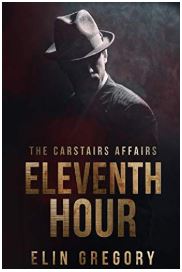




 Elin Gregory