Feeds:
Posts
Comments

Archive for the ‘Guests’ Category

Today it’s my privilege to hand over my blog to Kay Berrisiford, whose erotic historical fantasies interweaving of Saxon and Celtic legend with a thread of BDSM have been wowing her readers.

And there’s a new one out SOON!

Writing the Greenwood through history – why it’s so much more fun backward!

This month sees the release of Lord of the Forest, the third installation in my “Greenwood” stories, a series of m/m romances set in a mythical English forest, vaguely based on the New Forest, near where I live in Hampshire. Lord of the Forest is set in 1217, so I’m getting medieval, with a good sprinkling of myth-based magic and fantasy thrown in. As any of you who’ve followed the previous two books will realize, I’m also traveling backward in time—again. The first published book in the series, Bound for the Forest, was set in 1817. The events of the second, Bound to the Beast, took place in 1588, with its prologue located in 43 CE.

Although I didn’t plan things this way from the start, I decided early on— when writing Bound for the Forest— that I wanted to explore backward through time. The premise of the first book was that pre-Christian pagan religion had its roots in real magic and spirits, and that belief in these survived as late as the nineteenth century in the depths of the English Greenwood. Many of the ideas were derived from archaeological evidence of Iron Age religion (the Iron Age was roughly the first thousand years BCE.) For example, the method of sacrifice that one of the heroes, Scarlet, fears—death three times of by poisoning, cutting, and suffocation—was inspired by evidence from real human sacrifices. I also intended to integrate Romano-British and Celtic Gods. The water goddess Sulis, who plays a prominent role in Bound to the Beast and Lord of the Forest, was originally in Bound for the Forest too, but her scene was quite rightly cut for pace.

The statue of Robin Hood that stands in Nottingham, sculpted by James Woodford in 1952. Photo by Ian Britton.

The truth was, if I had been allowed to unleash everything I wanted to create, explain, and explore about my Greenwood world in Bound for the Forest, no m/m romance publisher would have touched me with the proverbial bargepole. I kept in all the world-building I could, while still keeping the focus on romance and plot, and realized that if I was going to do justice to the Greenwood universe, I would have to write the backstory some other way. Fortunately, it’s always been my instinct to write/make up histories. I’ve studied history for a period approaching the length of an ice age, and many years ago wrote a set of books and timelines for my Sylvanian Families that traced their history back to Muddy the Great, the, er, mole equivalent of Alfred the Great. I was a strange child.

The decision to make Herne the Hunter the hero of the second novel also naturally pushed me back in time. (Herne’s cameo in Bound for the Forest, unlike Sulis, survived the cutting room). Though I chose an Elizabethan setting for Bound to the Beast, Herne would have had his origins in a much earlier period, and I chose to make him a leader of one of the southern English tribes around the time of Roman colonization. The plot of Bound to the Beast also gave me an excuse to paint more of the religious backdrop: Herne is gifted his crown of antlers and immortality by the spirits, including Sulis and Taranis the Thunder God.

Herne, of course, brought his own baggage of myth and legend, which I had fun integrating. Robin Hood, the hero of Lord of the Forest, brought with him even more (which I will be blogging extensively about elsewhere on my release tour.) Robin’s presence pinned the third book nicely backward in time into the medieval period. I chose 1217, because this was the year of the Charter of the Forest (Carta de Foresta), a kind of Magna Carta of the forest, which on the surface undid some of the more extreme abuses of the strict laws against hunting and foraging introduced after the Norman Conquest. In my parallel Greenwood world, Robin joins forces with Herne and the fairies to fight the evil barons, who’re hoping to turn the Charter to their own ends—and setting the book then also gave me an excuse to expand yet more on my worldbuilding. The hero of Bound for the Forest was Melmoth Brien, who is the last in a long line of “protectors” of the Greenwood, and who has magic powers gifted to him by the sky gods. In Lord of the Forest, I am able to explain exactly how this magic came about, who his ancestors were, and how they fit in with the rest of the Greenwood crew (Herne, Robin et al.) But I better not say any more about that, because I’ll give away the plot!

I’m undecided as to whether there’ll be another full-length Greenwood novel (There will definitely be another novella. Locking Horns, a sequel to Bound to the Beast and a prequel to Bound for the Forest, is set in 1804 and featured characters from both—Herne and his lover Tam are conveniently immortal! Locking Horns is due out later this spring.) However, if there is a fourth novel, I’m going to be plunging back ever further into the mists, setting it in the early Iron Age, and explaining how the spirits bound to the Greenwood came to be there in the first place (yes, all that stuff about Holgaerst and Niogaerst.) That said, I also have an idea for a novella set in the Greenwood during World War Two. I can go forward in time as well, honest.

So there it is. I just love writing the history too much to not keep going backward. It also means, conveniently, that the books can be read in any order. However, from another perspective, the books are moving forward in publication order. Bound for the Forest, Bound to the Beast, and Lord of the Forest, are set in spring, summer, and autumn respectively. The fourth installation, if it ever exists, will be the winter book. To be brutally honest, I’m not sure what the symbolism of this progress through the nature and the seasons is. Nevertheless, I’m sure the Mother Goddess of the Earth, who presides over my Greenwood universe, would thoroughly approve.

Thanks so much to Elin for letting my blog here today!

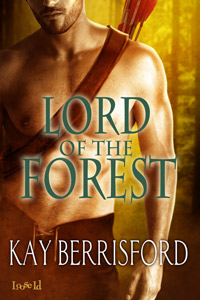
Lord of the Forest
KB_LordForest_coverlgBlurb:
England, 1217. Dark forces are rising. In the Greenwood, foul spirits grow powerful, and greedy barons plunder the lands. Only one man dares fight back—Robin Hood.

Robin’s band of brothers is broken. Now a lone warrior, he denies his famous name and laments the friends and lovers he’s lost. When the fair folk capture Cal, a beautiful young forester descended from the Greenwood’s ancient protectors, Robin rescues him and forges a new alliance.

Despite a sizzling attraction, Robin senses Cal isn’t like his old comrades, and he’s right. Cal’s been raised as a royal spy. He plans to seduce and betray Robin, but can’t harm the man he’s falling hard for. Mistrust and arguments spill into passionate lovemaking, as Cal learns the meaning of loyalty, fighting beside Robin, the only friend he’s ever known. Even the enchanted forest seeks to bind Robin and the returned protector ever tighter.

Their connection will be tested by nature’s wildest forces, Robin’s past, Cal’s lies, and in a baron’s darkest dungeon. To survive, Robin and Cal must admit their love and embrace their true destinies. Only then can they save England and each other—and win their happiness ever after.

Lord of the Forest (The Greenwood) will be published by Loose Id in early April. The first two Greenwood novels (Bound for the Forest and Bound to the Beast) are out now, and the series can be read in any order.

All titles available from Loose Id, Amazon and All Romance eBooks.

THE LORD OF THE FOREST BLOG TOUR DRAW!
If you’d like a chance to WIN your choice any of the current Greenwood novels, Bound for the Forest or Bound to the Beast, in your choice of paperback or ebook—PLUS a $20 Loose Id or All Romance voucher—all you need to do is leave a comment here, including your email (please spell this out e.g. katy@yahoo.com would be katy at yahoo dot com.) You can enter the draw as many times as you like at the different blogs I visit on my Lord of the Forest blog tour (for schedule visit http://kayberrisford.com). Two runners up prizes will be a choice of any of my back catalogue titles, excluding Lord of the Forest.

Comp closes midnight EST, 12th April.

Read Full Post »

comfy chair When I heard that my good friend Dianne Hartsock had written an historical romance I couldn’t wait to plonk her down in my chair again and ask her a few searching questions about her work.

Thank you, Dianne, for being here today to talk about your latest release, Wee Willie Winkie,  and how you came to write it.

~~~


Elin: Hello, Dianne

Dianne: Thank you so much, Elin, for having me back on your wonderful blog!

 Elin: What was it about the nursery rhyme “Wee Willie Winkie” that sparked your interest?

Dianne: When I was little, maybe five or six years old, I remember we had a huge illustrated book of Mother Goose Rhymes. Oh gosh, you’d have to sit on the couch with it in your lap to hold it! My favorite story was Wee Willie Winkie.

Or should I say, my favorite picture was the one that went with the rhyme. It was of a young boy wearing a flowing white nightgown and carrying a tiny lantern. He was running somewhere, blond curls flying behind him. He had such a mischievous grin on his face!

When Breathless Press put out the submissions call for Naughty Nursery Rhymes, I thought instantly of Willie’s smile. That little imp probably got into all kinds of trouble growing up! I began to think of the wild escapades he might have lead his friends into, and so began my story.

 Elin: I know that you have previously written fantasy and horror. Is this your first foray into historical?

 Dianne: Yes it is, and the funny thing, is that when I was writing the story, I never thought of it as an historical piece. It was a straight up m/m erotic love story that just happened to take place in the 1880’s, in keeping with the white nightgown I remembered in the picture. When men still wore nightgowns. Or at least I think they did. Not that I spend my time picturing men in or out of nightgowns…never mind.

Elin: Was it a very different writing process?

 Dianne: It was a little different, but also a lot of fun. Since I mostly write contemporary stories, there was more research involved with Wee Willie Winkie. Also, I had to make a reference to the nursery rhyme somewhere along the way, when with my other stories I usually just start writing and see where we end up. I’ll have a pretty good idea of the beginning, the middle scenes, and how I want the story to end, but things always seem to get a little complicated along the way. In Wee Willie Winkie, some of the things that happened to Fredrick in the course of the story, I hadn’t thought to put in until a bit of research sparked the scene. I love when that happens.

 Elin: Did you find the inevitable research onerous or fascinating?

Boston Harbour in the mid nineteenth century

Dianne:  I enjoy research for its own sake, and with Wee Willie Winkie I had the chance to delve into the politics of Boston and Newport in the late 1800’s. I had the fun of researching the merchant vessels of that time. Many merchant lines had already converted to the steam engine, but that is so unromantic! I had to have the Wilkerson’s still use sailing vessels.

While researching I also stumbled upon the fact that shanghaies were still being carried out. Scary stuff. Some poor guy would get knocked out in an alley or somewhere when they were alone, then would wake up on a ship far out at sea and made to work or starve. They may not see their home again for a good year, if ever. I also got to dig through old photos of Boston Harbor at that time. A bit different than modern days!

Okay, I could go on like this ad nauseam. Like I said, I enjoy research for its own sake. The fact that it helps with my writing is a plus.

Elin:  Without Aiden is a very different atmosphere to Wee Willie. Did you find it a big adjustment to go from one to the other?

Dianne:  I was actually in the middle of writing WITHOUT AIDEN when I set it aside to write WEE WILLIE before the deadline for submissions came and went. While I did have to get into a different mindset for WEE WILLIE, it wasn’t extremely hard. I’m a big fan of romance novels written between the 1880’s-1920’s and have an extensive collection of them. When I sat down to write WEE WILLIE, I was able to take the feel of these love stories and capture it in my own romance. At least, that’s what I attempted.

 Elin: Do you prefer writing contemporaries to your other genres?

 Dianne: I wouldn’t say that I prefer it, but it is the easiest! To me, writing a contemporary story is like telling of something that happened to a friend just the other day. Or retelling a story a friend told me about a friend of theirs who had such and such a thing happen. The story lines seem to flow naturally and easily without too much effort on my part. I don’t have to try to imagine what their world would be like. I’m living it.

On the other hand, writing in other genres is a challenge, and I do like to push my limits as a writer, see if I can make a certain scenario work. Is it plausible? Can I make the magic believable? Or, in the case of the historical, are my facts straight and are my characters acting in the fashion of that time? I have a short sci-fi story on my list of things to write this year, but it’s the science that’s holding me back. Definitely a challenge! *rubs hands together* Time for more research!

Elin: What’s next? What are you working on or would you sooner keep it a big secret?

Dianne:  Oh gosh, let’s see… It seems that at the moment I have four different projects I’m juggling. I have edits due on another short story for an anthology with Breathless Press, this time based around the nursery rhyme ‘Old McDonald’s Farm’. I’m 7k into a new contemporary romance that I’ve had to put aside—again—to work on the anthology. I’m 9k into a novel I’m writing as the sequel to my psychological thriller ALEX. And I’ve also started writing a Free Read on a friend’s blog, adding between 700-1000wds a week. Which you can find here! *wink* http://leatherandlacereads.blogspot.ca/search/label/Stuck%20on%20Rewind

Elin: Can we have an excerpt of one of your new releases?


WEE WILLIE WINKIE


Willie has met an old flame, but is he willing to give up the decadence of Boston society for the man he loves?

For the past three years William Wilkerson has led the life of the privileged rich. Head of his father’s shipping business, Willie indulges in the pleasures of Boston’s fine young men to his heart’s content. That is, until he meets Fredrick, the one man who has captured his heart, again.

As his former tutor, Fredrick has been declared off limits by William’s father. Fredrick also believes he’s beneath the attention of Wilkerson’s heir. Willie disagrees, but is he willing to throw away rank and privilege for the man he loves?


Excerpt:


Fredrick held up his glass and stared at the candle’s flame through the amber liquid. He took a sip, savored the rich, biting taste on his tongue. He welcomed the burn down his throat. This was the very last drink he could afford, and he had to make it last.

A giggle erupted from the booth in the corner, the one whose curtains were drawn against curious eyes. A smile tugged at Fredrick’s lips despite the dire state of his wallet. The laugh had been carefree, joyous, naughty. Fredrick shifted on the cushioned bench. Only a few straggling customers remained in the dining room. He wondered if any of them would notice if he shifted his cramped cock as it throbbed in sympathy with the bright laughter.

Rather than risk it, he watched the fruit vender outside the window beguile a customer. Another giggle and stifled moan swiveled his attention back to the corner. A silk-clad foot and slim calf peeked beneath the curtain. He grinned even as the delectable sight emphasized his own loneliness. It had been far too long since he’d had someone in his bed.

“Excuse me. Sir?”

Fredrick looked up, distracted from his memory of lush lips and white skin and wide, hazel eyes, and blinked at the stout innkeeper at his elbow. “Yes?”

A frown fleeted across the man’s homely face at another bout of laughter from the corner. “If they’re disturbing you, I can have Wee Willie take his guest upstairs. Excuse me, I mean Mister Wilkerson.” The man broke off, flustered by the slip of the tongue.

Fredrick’s heart leaped on hearing the name mentioned. Is William really here? How could that be? The innkeeper coughed, and Fredrick frowned at the intrusion into his thoughts. The man was so damned serious about such a minor indiscretion. “They’re no bother. In fact, I’m almost done anyway.” He lifted his nearly empty glass. Hearing a shout, they looked over in time to see a young man tumble through the curtains onto the floor. Fredrick caught a glimpse of red hair and an embarrassed cheek before the gentleman crammed a hat on his head and strode passed them, face averted. The innkeeper shrugged and followed, likely to be sure he paid for his drinks.

Fredrick stared at the silk-clad foot still protruding from the parted curtains. He loosened his hold on his glass but had no way to stop the wild hammering of his heart. Before he lost his courage, he stood and swallowed the last of his brandy, then walked the short distance to the booth.

A grin tugged the corner of his mouth at his eagerness. It had been three years, after all, and they’d parted in anger. Would William acknowledge him? His hand trembled as he drew aside the heavy curtain and allowed his gaze to travel up the silky hose to bright blue trousers. Blood heated his face when he found the laces undone at the waist and the silk shirt open to expose white skin and rosebud nipples.

A sigh brought his gaze up to the pretty face that stirred his dreams. Rich brown curls surrounded lovely hazel eyes and full, pouting lips. He groaned when a delighted smile revealed the even, white teeth that had nipped his collarbone on more than one glorious occasion. “Freddie, is it you?”

~~~


Thank you, Dianne, for being such a good sport.

You may buy Wee Willie Winkie from Amazon and All Romance eBooks  and you can follow Dianne at the links below.

Blog: http://diannehartsock.wordpress.com/

Facebook: http://www.facebook.com/home.php#!/diannehartsock

Twitter: http://twitter.com/#!/diannehartsock

Goodreads: http://www.goodreads.com/user/show/4707011-dianne-hartsock

Amazon Author Page: http://www.amazon.com/Dianne-Hartsock/e/B005106SYQ/ref=sr_ntt_srch_lnk_1?qid=1361897239&sr=8-1


Read Full Post »

comfy chairMy guest today is Lisa Henry, resident in Australia but her imagination roams the world and the genres from contemporary drama to ancient history. Her work has received glowing reviews and has been picked as The Romance Reviews top picks.

Thank you very much, Lisa for agreeing to answer my questions today.

null

Elin: Do you have a crisp mental picture of your characters or are they more a thought and a feeling than an image?

Lisa: I like to know what makes my characters tick, but I never have more than a vague idea of their physical descriptions in my head. I’ll write sticky notes about eye colour, hair colour, and who is taller than who (otherwise I’d get mixed up when it comes to love scenes) but that’s about the extent of it. When I read I usually like to fill in most of those gaps for myself, and I think a lot of readers do. Sometimes when an author reveals their inspiration for a character I’m very surprised. Wait, that’s not how I pictured him at all!

Elin: Do you find there to be a lot of structural differences between a relationship driven story and one with masses of action?

Lisa: I tend to write relationship driven stories rather than action, simply because I think I’m better at it. I love reading a great action sequence, but I do find them trickier to write. In an action driven story you have to keep a very tight pace, and one piece of action has to lead directly to the next and so on. In a relationship driven story you’re allowed more space to breathe and reflect, I think, which suits my style more.

Elin: Are you a plotter or a pantser?

Lisa: I’m a pantser who is attempting to be a reformed-pantser, but I have found that whenever I attempt to sit down and plot, I get bored with it because I just want to dive right into the writing. So instead of working more at the beginning with plotting, I work more at the end with brutal editing. There is often very little in common between my first and final drafts.

Elin: Villains – incredibly important in fiction since they challenge the main protagonists and give them something to contend with beyond the tension of a developing relationship. What sort of villains do you prize? A moustache-twirling nightmare or … ?

Lisa: I love villains, but no moustache-twirlers for me. I like my villains to be more complicated than that, and I think it’s important to remember that “evil for the sake of evil” is incredibly rare. Most villains don’t think they’re evil, which makes them much more terrifying. The closest thing I’ve ever written to a moustache-twirling villain would be Vornis from The Island, but even he’s not evil just for the sake of it. He makes examples of the men who cross him because it is necessary in his line of work. He happens to enjoy it as well, but it’s not done without reason.
I think Nero is one of history’s most fascinating and complicated villains, because he really did start out with so much promise and so many good intentions. Because of that, it’s tempting to be somewhat sympathetic towards him: you can see how the people around him poisoned his mind, you can see how tormented he was, and you can see how power corrupted him. That aside, he was a complete monster by the end, and deserved to die.

Elin: Do you enjoy research for its own sake or do you just do what is necessary for each project? What was the most interesting fact you discovered in the course of your research that didn’t make it into your novel?

Lisa: I can get totally lost in research, because it’s all too fascinating. I love learning about how everyday people lived, and I try to get the details right. I have a by-no-means-comprehensive list in my head that I need to check off before I feel comfortable writing about an historical period. It includes things like what did they use instead of toilet paper, what did they use for birth control, what did their shoes look like, what did their houses look like, and what did they eat for dinner? I think you have to know the basics before you can attempt to recreate a world, even if those details don’t make it to the page.

One of the most fascinating things I learned about Ancient Rome that never made it into He Is Worthy — and was never going to, I just got completely sidetracked — was about cosmetic surgery. Yes, in Ancient Rome you could get breast reductions, nose jobs, and eyelifts. The Romans knew about blood and circulation, and even how to reshape cartilage, but given that they didn’t know about germs, or have much in the way of anesthetic, I imagine you would have to be very brave or very desperate to go under the knife.

Elin: Short vs long – which do you prefer to read/write?

Lisa: I prefer to write long, but I’ll read anything. As long as the story pulls me in, I don’t mind if it’s a tiny piece of flash fiction, or War and Peace.

Elin: Would you say that a short story is harder to write than a long one?

Lisa: Absolutely! For me, at least, which is why I generally write long. Short stories require almost a different skill set. They have to be sharper, and neatly honed, if that makes sense. I like that in longer works I can detour a little bit, and see where it takes me. It probably comes back to being a pantser rather than a plotter.

Elin: Put together your ideal team of men – drawing from all and any walks of life, fictional or non-fictional – who you would want to come to your rescue if menaced by muggers/alligators/fundamentalists?

Lisa: I’m going to choose all fictional, since my chances of a happy ending are stronger there. I think Dean from Supernatural would be great in the case of both muggers and alligators, and demons of course, but maybe not fundamentalists. In the case of fundamentalists, I would want a Special Ops team including James Bond, Boromir from The Lord of The Rings, Daryl Dixon from The Walking Dead, and Jack Bauer from 24. And, just to cover all bases, the Scarlet Pimpernel. Oh, and Moriarty from the BBC’s Sherlock. I want him planning the entire operation.

I don’t think I’ve left any room for error there…

Elin: “Had we but world enough and time” and no other commitments, is there anything you would write that you’ve been eyeing and putting off because it’s just too big a project?

Lisa: I want to write a series of novels set in the one universe, full of political machinations that would make the Borgias proud. At the moment I’m leaning towards space opera rather than historical, because that way I can do all the world building myself, and fit all the pieces together without having to worry about historical accuracy. But I wouldn’t say I’m putting it off because it’s too big a project — I’m putting it off because I keep getting distracted by new, shiny ideas.

I’m also being plagued by plot bunnies for a sequel to Dark Space, an m/m romance that came out in December. I’ve never written anything before with the intention of writing a sequel, so this feels entirely ambitious for me. But Dark Space has been so well received, and I loved writing in Brady’s voice so much, that I just know I’m going to have to go back to that world.

Elin: Borgias in space? You can put me down for one of those.
When you have been writing a scene, have you ever scared yourself/upset yourself so much that you decided to tone it down a bit?

Lisa: There was one scene in an earlier draft of He Is Worthy that I cut, because it was just too much. I wanted to show Nero’s brutality, so I had a scene written from Aenor’s POV where another slave was turned into a human torch. When I’d finished it was just too horrible, so instead that scene was cut down to the one sentence where Senna is in the gardens and sees the remains of the slave. I didn’t want to shy away from showing how monstrous Nero was, but that scene was just too upsetting.

Elin: I’m very glad you didn’t put that in the book. The little bit you did include was upsetting enough, though necessary, I think, to get across just how perilous a slave’s position was in that society. What are you working on at present?

Lisa: At the moment I’m in the process of editing The Good Boy, co-written with the amazing J. A. Rock, which is a contemporary m/m with a BDSM theme, which will be released around March by Loose Id. I’m currently writing another historical, set in Wyoming in 1870, with the working title Sweetwater. My MC, Elijah, is partially deaf thanks to Scarlet Fever, and finds himself having to choose between two very different men with two very different agendas.

Elin: Could we please have an excerpt?

Lisa: I’ll go with Sweetwater, since this site is all about historicals! This is the (very unedited) opening scene:

1870, South Pass City, Wyoming Territory

A spray of blood hit his face like hot rain, and Elijah Carter clamped his mouth shut.
“Hold him! Hold him!”
The rope had slipped when Dawson made the first cut, and the yearling was trying to buck them off now. Elijah and Lovell had it pushed against the fencepost and were trying to hold it there, Lovell against its hindquarters and Elijah shoulder-to-shoulder with the yearling. Elijah didn’t know which of them had the worst end of it. He wasn’t sorry to be out of the way of those back legs, but if the swinging thick skull of the panicked animal collided with his, he’d be in real trouble. Elijah pushed his forehead against the yearling’s neck. Closer was safer, if they could hold it.
Dawson was drunk, probably. His hands shook too much, and they were weak too. He’d been a good butcher once, back when Elijah first started working with him scrubbing the floors and the counters in the shop and doing the deliveries. Then Dawson’s drinking had picked up, and now he couldn’t even slaughter a yearling without fucking it up.
Elijah’s cheek scraped against the coarse coat of the yearling. He smelled blood and dust.
The yearling pitched forward and Elijah’s grip slipped.
“I said hold him, you simple deaf cunt!” Dawson grunted.
Elijah didn’t need to see the shape of Dawson’s mouth in the lamplight to make out the words. He’d heard the insult often enough.
Hot blood washed over Elijah’s fingers. He dug his boots in the dirt, fighting against the struggling animal. The yearling bellowed — a long, high-pitched sound that vibrated against Elijah’s face, his hands. It moved through him, and jarred his bones.
Elijah closed his eyes as Dawson’s knife passed close in front of his face. He hoped Dawson wasn’t drunk enough to take his fingers with the next cut. He hoped the lamp hanging off the fence gave enough light for Dawson to finish the task.
Working in the dark was dangerous, but it had to be done. The beasts were mavericks, brought down from the hills into South Pass City. They had to be slaughtered and butchered under the cover of the night, and served up on dinner plates all over town before the sheriff came asking questions.
Elijah hadn’t seen the faces of the men who’d herded them into town. There had been maybe four of them, all wearing their hats pulled low. In the darkness, they could have been anyone. Elijah hadn’t stared. It was safer that way. He’d stayed out of the way while Dawson had done business with the men, then Lovell had come to fetch him. And here they were.
The yearling bellowed again.
Blood again. A flood of it this time, as free flowing and hot as bathwater poured from a kettle. It turned Elijah’s stomach, and he fought the instinct to pull away.
The yearling sank to its knees and Elijah went forward with it. He could hear its heartbeat echoing inside his skull, in panicked counterpoint to his own. It beat slower, and slower still.
Elijah was slick with blood. He shifted back, his body aching. He kept one bloodied hand on the neck of the yearling, his fingers splayed. It was too weak to struggle now. Its ears flicked back and forth and its eyes rolled.
The yearling’s breath came in short pants. So did Elijah’s. Kneeling together in the dirt, they waited. Blood, black in the night, pooled around them.
Dawson laughed, lifting his arm to wipe his sweaty forehead on his sleeve. The blade of the knife made an arc in the scant lamplight. Dawson’s skin was yellow and puffy these days. His gut was bloated. Elijah had read enough of Dr. Carter’s medical books to recognize it as cirrhosis. Dawson was an asshole, and every day, every drink, he was closer to death. Elijah had more sympathy for the yearling than the butcher.
The yearling sighed, stilled.
Lovell dropped a hand on Elijah’s shoulder. “We’re done.”
Lovell never treated Elijah like a fool. Never pulled his mouth into exaggerated shapes to mock the way Elijah spoke. Never laughed at him or slapped him in the head for being slow to understand.
Elijah rose to his feet, bracing himself against the dead yearling. The beast felt more unyielding now than when it had been struggling against them. Dead things always did. The difference between alive and dead was both infinitesimal and immense: the tiny space of only a single heartbeat was as wide as an abyss.
Elijah spat, and wiped his hands on his bloody apron for all the difference that it made.

~.~

Thank you, Lisa, that was terrific.

If you would like to follow Lisa online you can find her blog here, on Twitter as
@LisaHenryOnline and she hangs out on Goodreads a lot too.

He Is Worthy

Rome, 68 A.D. Novius Senna is one of the most feared men in Rome. He’s part of the emperor’s inner circle at a time when being Nero’s friend is almost as dangerous as being his enemy. Senna knows that better men than he have been sacrificed to Nero’s madness—he’s the one who tells them to fall on their swords. He hates what he’s become to keep his family safe. He hates Nero more.

Aenor is a newly-enslaved Bructeri trader, brutalized and humiliated for Nero’s entertainment. He’s homesick and frightened, but not entirely cowed. He’s also exactly what Senna has been looking for: a slave strong enough to help him assassinate Nero.

It’s suicide, but it’s worth it. Senna yearns to rid Rome of a tyrant, and nothing short of death will bring him peace for his crimes. Aenor hungers for revenge, and dying is his only escape from Rome’s tyranny. They have nothing left to lose, except the one thing they never expected to find—each other.


Buy “He Is Worthy” here:

Riptide
Amazon US
Amazon UK
B&N
All Romance eBooks

Previously posted on Speak Its Name.

Read Full Post »

comfy chair

My interogatee today is Sam Starbuck – dreamer of dreams, spinner of stories, teller of tales short and tall. Sam’s blog, a winner in the 2010 Author Blog Awards, is so well attended that he laid on refreshments in Sam’s Café and he has pioneered a unique method of novel writing using peer group appraisal that led to the founding of Extribulum Press. He has recently published a novella by a more traditional method – The City War, part of Riptide Press’s “Warriors of Rome” series – and since Rome, Republican or Imperial, is close to my heart I decided to try and get him into my Comfy Chair.

All right there, Sam? Here we go!

~~~
Elin: The City War is about one of the best known incidents in historical Rome. What inspired you to retell it?

Sam: It’s always easier to retell a historical story when everyone knows a little bit about it. But because everyone knows a little, and very few people know a lot, it’s also really fun and interesting to tweak it slightly — to say “This is how it could have been” and make people look at the story differently. I like taking stories that everyone knows and turning them on their head — you see it done a lot with fairy tales in popular media these days. And at this point the story of Julius Caesar’s assassination is almost fiction anyway; it did happen, but most of us know it from pop culture references or Shakespeare.

Elin: You have been publishing successfully with your own set up Extribulum. What prompted you to go down the more traditional route with The City War? Did you find the process very different?

Sam: I have to admit that I didn’t have The City War written and ready and just decided to send it to a press. I was linked by a friend to Riptide Press’s call for stories of Ancient Rome, and noticed that the Warriors of Rome collection only had thirty days left before the submission deadline. I wanted to adapt an idea I’d had about Cassius and Brutus being lovers, because while Caesar is interesting from a military and a tactical standpoint, I’ve always felt that there was more potential for interpersonal exploration with the men who killed him. It seemed like the perfect time to actually sit down and write the story, and I liked the challenge of writing it in a month. I’m a fast writer and fortunately the novella word-count limit was within my capacity.
The process is different mostly once you’ve got the first draft in, and mostly it was different in my head. With independent publishing I really only answered to myself and the readers, but with small-press publishing you have people depending on you, you have deadlines that matter because if you don’t meet them someone else has more work to do. There’s more pressure, though that’s not necessarily a bad thing when you’re a procrastinator like me.

It’s still about the story — rewriting for clarity, making sure there are no typos or continuity mistakes — but you have a group of people who are specifically dedicated to helping you out, which does take some weight off your shoulders. And once the final draft was in, I was done; no typesetting, no coding, I could just take a breath and wait for the finished product. For some that might be nervewracking but for me, giving up control of that part gave me some time to process and come down from the excitement of the writing.

Elin: I know one author who can’t write without copious amounts of Diet Coke and another whose first priority is to establish her characters’ playlists. Do you have any writerly habits, without which you find the composing process difficult?

Sam: I don’t think I have as many habits as others do. For a long time, writing was something I had to do on the fly — when I had no students during office hours as a grad student, when I had nothing to do at the desk during my first job, and now on lunch breaks and after work. I had to get used to working in a variety of environments and frequently in public.
I think the only thing I really have trouble with is noise — the ambient office noise around me doesn’t bother me, but I can’t listen to music or spoken word audio while I write. I find the words too distracting.

Elin: This is a horrible question to ask but here goes – where do your ideas come from?

Sam: Ideas come from all over, really. Sometimes it’s a situation you’d like to see someone put into, or a situation you’ve experienced in real life; sometimes I see photographs and wonder about the people in them, or news articles, or stuff on the television. A lot of writers will say that there’s no way to explain how they get their ideas, but I know mine mostly come from the world around me, and the more I interact with that world, the more ideas I have. The City War definitely came from history, and I am a Classics nerd so I have read the original life of Caesar and the life of Brutus, but also from seeing Brutus played sympathetically in a production of the Shakespeare play, and wondering why such a moral man chose to throw in with a slightly shady character like Cassius.

Elin: The City War is historical. Trace and Nameless are contemporary with a little twist of paranormal. You have also written Other People Can smell You a college survival guide. Is there any other genre that you are eager to try? Any you wouldn’t touch with the longest sharp stick?

Sam: When I was a younger writer I used to really like moving around between genres and even media — prose to screenplays to poetry, and stories from all over the place. I’ve settled down a bit and generally I write either contemporary lit or magical realism, but I wouldn’t mind trying more science fiction if I could come up with a plot I felt hadn’t already been done. I admit science is not my strong suit, though, so I’m a bit wary of scifi as a writer. I like it as a consumer.
I think really one of the few genres I haven’t done much with is the murder mystery, because in all honesty I’m terrible at mysteries. I like reading them, at least some of them — the old classics from the twenties through the fifties are often my favorite — but I don’t have the kind of tricky brain I think it takes to write them. Plus they usually have a large cast of characters, and the more characters I have to track, the more scatterbrained I become.
So…there’s nothing I’d never go near out of sheer dislike, but I’ve reached a point where I know what I do well, and I choose to avoid what I do badly.

Elin: So what next? Are you working on anything now? Can you tell us about it or do you prefer to keep stories under wraps until they are finished?

Sam: Oh, I don’t mind talking about stuff, but sometimes I never finish it, so it’s always a toss-up. For Riptide, I’m looking at writing a piece set during the second world war, about the Monuments Men who ran around Europe trying to rescue precious artworks from the ravages of war. In terms of other work, I’m a little adrift right now; the holidays always make it harder to focus. But I always have a few things in the pipeline, which leads us to…

Elin: Could we please have an excerpt of something?

Sam: Absolutely! This is a short clip from the opening of Pirate Country, a sequel to my novel The Dead Isle.

***

The new airshipyard of Australia, housed in a dusty field just south of Canberra, was bustling in the late morning light. Shipbuilders recruited from the ports at Sydney were at work on boats and engines, metal and wood creaking. In the great shady balloon house the clack of sewing machines could be heard, and cries of greeting as an automobile laden with Chinese silk from the trade ships to Asia pulled up to the loading door. The sun turned everything golden, sawdust dancing in the air.
Jack Baker shaded his eyes from the roof of the chemistry building, balancing precariously on the central beam, studying the airshipyard critically.
“Saying goodbye?” Murra asked, head and shoulders emerging from the window below the roof. Jack, his sun-bleached hair ruffling in the wind, looked down and smiled.
“Just watching it all go,” he replied, settling the wide-brimmed bush ranger’s hat back on his head. “It’ll run fine without me. Practically already is.”
“Bet you wish you were down there elbows-deep in the guts of an engine,” she said.
“Maybe.”
“Come inside, Jack, the train’s leaving soon.”
Jack grasped the angled flagpole at the edge of the building, sliding down it deftly; she obligingly backed away from the window so he could swing inside, boots-first. The staff, engaged in the delicate process of making and bottling helium, were used to his habit of coming in through windows and didn’t even look up as he descended the staircase, Murra a step ahead.
“How long until the first ships take sky?” she asked, as they walked through the yard towards the gate, where the afternoon train could run them back to Canberra. Jack had a Harrison, a gift from the automobile-maker, but Murra’s brother Memory had asked to borrow it that morning for some errand or other.
“Two weeks, maybe three.”
“Sure you don’t want to stick around, be certain nothing goes wrong?” she asked.
He smiled. “I’d like to, but it’s well in hand. Purva’s ready to go, and I’m afraid she’ll hijack the ship and go without me if I stall.”
“And you miss the air.”
“More than anything,” he said wistfully, turning his head up to the sky. “I didn’t know I could miss flying so much.”
***
The City War
By Sam Starbuck

Senator Marcus Brutus has spent his life serving Rome, but it’s difficult to be a patriot when the Republic, barely recovered from a civil war, is under threat by its own leader. Brutus’s one retreat is his country home, where he steals a few precious days now and then with Cassius, his brother-in-law and fellow soldier—and the one he loves above all others. But the sickness at the heart of Rome is spreading, and even Brutus’s nights with Cassius can’t erase the knowledge that Gaius Julius Caesar is slowly becoming a tyrant.

Cassius fears both Caesar’s intentions and Brutus’s interest in Tiresias, the villa’s newest servant. Tiresias claims to be the orphaned son of a minor noble, but his secrets run deeper, and only Brutus knows them all. Cassius, intent on protecting the Republic and his claim to Brutus, proposes a dangerous conspiracy to assassinate Caesar. After all, if Brutus—loved and respected by all—supports it, it’s not murder, just politics.

Now Brutus must return to Rome and choose: not only between Cassius and Tiresias, but between preserving the fragile status quo of Rome and killing a man who would be emperor.

The City War is part of Riptide’s ‘Warriors of Rome’ collection and may be obtained here.

This post has been cross-posted to Speak Its Name.

If you would like to follow Sam his blog is here and he is on Twitter as @ouija_sam

Read Full Post »

I’m very pleased today to hand my blog over to Charley Descoteaux whose novella, Comfort and Joy, is releaed today from Etopia Press.

Charley has provided musical links for your listening pleasure so just click on the pictures to be taken to the videos.

~~~

Thanks for having me, Elin.  I love your historical hunks so visiting your blog is a special thrill.

 A lot of writers listen to music while they write, to get into the right mood.  I love music so I’ve tried this too—many times—but it just doesn’t work for me.  I get in touch with my characters through music, but if I listen while writing then I end up typing the lyrics!

Some of my characters are into jazz or classical, but listening to music without lyrics isn’t much better.  I’ll get caught up in the rhythm section interplay or a brilliant phrase I hadn’t noticed until right then.  So I try to listen to one or two pieces of music and then turn it off and write.  Once I can force myself to do that (which isn’t always easy!), I’m off to the races.

Vince Guaraldi – Christmas Tree

One of the characters in Comfort and Joy even started a new musical obsession for me:  jazz.  Before I got to know Charlie Price all I really knew about jazz was from watching the Charlie Brown holiday specials or by listening to people who say things like “it’s the notes they don’t play” (which I still don’t get!).  But Charlie insisted it was cool and since he has a much better handle on that kind of thing than I ever will, I kept an open mind.  Now, West Coast jazz is the style of music you’re most likely to hear at my home or in my car.  There’s something for every mood under that label, but my favorite is still Vince Guaraldi.  It’s impossible to listen to his work and not smile—it makes the kid in me happy even if the piece isn’t one Snoopy’s ever danced to.  Plus, it cuts down on my road rage.

I’ve been exploring other styles of jazz as well, and found an amazing album by Duke Ellington that’s his take on The Nutcracker Suite.  My favorite cut is “Sugar Rum Cherry”, his arrangement of Dance of the Sugar Plum Fairy.  This is the jazzy piano piece featured in Comfort and Joy, and I hope you enjoy it as much as I do!

Duke Ellington – Sugar, Rum, Cherry

Charlie started as a classical pianist, and though he still loves Beethoven he considers himself a jazz musician.  He played his first club at sixteen, after he ran off to Europe to search for fame and love and sex (not necessarily in that order!)—he was born into the fortune so that helped!

Before he met Sam, he would’ve said one of the highlights of his life was the time he was seduced after a gig in Paris.  Not a word of English was spoken for a good 48 hours.  If asked about his musical goals, Charlie would probably say he wants to find a bass player to round out their trio and become the next Guaraldi or Brubeck.  I’m sure Sam would be perfectly happy as drummer in The Charlie Price Trio.

Right now, I’m working on a new story, and that main character is a young guy who grew up on Reggae, so I’m listening to a lot of Jimmy Cliff and Bob Marley, and peeking in on the Music Choice Reggae station regularly to find new-to-me music to fall in love with.

Jimmy Cliff – I Can See Clearly Now

Thanks again Elin!

Comfort and Joy

   How much love does it take to heal the wounds of hate?

 Sam and Charlie have been together over a decade, and their commitment to each other has only grown stronger through the years. But love isn’t always easy, and eighteen months after a violent assault, their fairy-tale relationship is still struggling. Charlie can’t shake the lingering fear of attracting more violence by displaying affection, and he’s angry at himself for not getting past it. Sam would do anything to help Charlie feel better—if only he knew what that was.

 The century-old farmhouse in Northwest Oregon is the perfect place to spend the holidays with Sam’s family, but it was their refuge after the attack, and it still holds painful memories of those difficult first months. Christmas should be a joyful time, but even being surrounded by people who love him isn’t enough to make Charlie feel safe. He could try to keep to himself, but even if Sam agreed to give him the space he needs, Sam’s warm and loving family might not. And even though they agreed not to exchange gifts, Sam has a surprise up his sleeve that he hopes will make everything merry and bright. But he may end up more surprised than Charlie before the week is out…

 Excerpt:

Sam continued up the stairs, considering how to go about putting Charlie’s perfect ass on a piano bench became entangled with the unfortunate fact that as long as they slept upstairs they would be showering separately. He gave Charlie first chance at the hot water and then sped through his shower as fast as he could. Sam stopped just inside the bedroom door and closed it quietly. He towelled his hair and let his gaze linger on Charlie, lying still on top of the quilt, bare feet on the floor, partially covered with a green towel. A slice of moonlight filtered through the curtain on the opposite wall and across Charlie’s body, which was a work of art even when not bathed in romantic mood-lighting. After a few moments Sam realized Charlie was also watching him.

Charlie flipped the towel up and away from his body and Sam felt as though someone had just grabbed him by the throat. After barely a heartbeat’s hesitation he strode to the foot of the bed and leaned over Charlie to kiss him. Sam’s free hand caressed his slender chest and shoulders. When he felt goose bumps Sam lowered himself over Charlie but kept all his weight on both knees and one hand.

Sam moaned softly and moved his dark hand over the fair skin on Charlie’s abs. He hadn’t regained any of the bulk he’d lost but made up for it with dizzying definition and a solidity he hadn’t had before.

“Vanilla ice cream.” Sam began to kiss his way down Charlie’s chest and felt a cool hand on his head exerting a gentle pressure, urging him lower.

“You’re lactose intolerant.”

Sam looked up and grinned for a short moment, then slipped down even farther. “I’ll just have to lick you instead.”

BIO:

 Charley Descoteaux has always loved stories and began writing them down to appease the

characters in her head who insisted daydreaming just wasn’t good enough. Home is Portland,

Oregon, where the weather is like your favorite hard-case writing buddy who won’t let you get

away with taking too many days off, and in some places you can be as weird as you are without

fear.

 Buy Links:

 Amazon US: http://www.amazon.com/Comfort-and-Joy-ebook/dp/B00APRADZ0/ref=sr_1_1?s=digital-

text&ie=UTF8&qid=1355808008&sr=1-1&keywords=etopia+press

 Amazon CA: http://www.amazon.ca/Comfort-and-Joy-ebook/dp/B00APRADZ0/ref=sr_1_12?s=digital-

text&ie=UTF8&qid=1355903420&sr=1-12

Amazon UK: http://www.amazon.co.uk/Comfort-and-Joy-ebook/dp/B00APRADZ0/ref=sr_1_14?s=digital-

text&ie=UTF8&qid=1355903557&sr=1-14

Barnes & Noble: TBA

All Romance eBooks: https://www.allromanceebooks.com/product-comfortandjoy-1026128-145.html

Rattle my cages:

 Blog: http://cdescoteauxwrites.wordpress.com/

 Facebook Author Page: http://www.facebook.com/CharleyDescoteauxAuthor

Twitter: https://twitter.com/CharleyDescote

Goodreads: http://www.goodreads.com/user/show/13665577-charley-descoteaux

 e-mail: c.descoteauxwrites@gmail.com

Read Full Post »

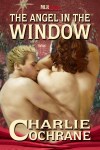
I’m so pleased and excited to welcome Chalie Cochrane to take over my blog today in honour of her new release “The Angel In The Window”, a stirring age of sail story set in the late 18th Century.

Take it away Charlie!!

~~~

There’s something about a man in uniform that gets us all of a lather, isn’t there? Especially a historical uniform – the film “Master and Commander” always gets my heart going pitter-patter, with all those dark blue coats and the gold braid and the tight white britches…*fans self*

I wonder what it is that provokes such a reaction (apart from the obvious?) Maybe it’s the hint of the military, the suggestion of power contained, strength hidden within a structure of discipline and restraint. And the thought of what that power might be like when it’s unleashed, of course. Or maybe it’s the subtle changes clothing makes; some people look fabulous in a suit, less so in casual clothes. Rugby shirts (tight rugby shirts!) make almost everyone look gorgeous. I remember James Darcy saying that the costumes for M&C had been constructed in keeping with Age of Sail fashions – lots of strings and pullings (excuse pun) in. It had made him stand with a better, more erect (oh, do stop being smutty!) posture. Maybe that adds to the allure.

Osprey books uniform porn – I can’t recommend them too highly

One of the things I loved about M&C was how realistic everything looked; from ships to sea battles (alas the same can’t be said of my other love, the Hornblower TV series). The weathered appearance of the gold braid had, I believe, come about during the filming as the sea air gave it a tarnished look, which is, apparently, exactly the greeny sort of tinge it should have had.

I also like the stories of how and why changes to uniforms (or any clothing) come about. Are you wearing jeans? Look down at the right hand front pocket. Is there a little pocket above and partly inside the main one? That’s to put your pocket watch in. As we all do, regularly. Yet there it is, like a sartorial appendix, hanging around doing diddly squat but there because it has been for ages and nobody’s seen fit to remove it.

Seen the buttons on a midshipman’s cuff?

The story is that they were put there to stop the little toads wiping their noses on their sleeves. Do they live on in the redundant buttons that often grace a man’s suit jacket? I like to think they do, inhibiting the sliver sleeve phenomenon down the years.

And the other thing about men in uniform is that they inspire a girl to get writing. The Angel in the Window can be traced back, ultimately, to me standing in a museum in Jersey (old, not New) gazing enraptured at a lieutenant’s dress uniform dating back to the time of Trafalgar. And imagining the man who used to be inside it…

1400x2100The_Angel_in_the_Window

Title: The Angel in the Window

Buy link: http://www.mlrbooks.com/ShowBook.php?book=CCANGELW

Blurb: Two officers, one ship, one common enemy.

Alexander Porterfield may be one of the rising stars of Nelson’s navy, but his relationship with his first lieutenant, Tom Anderson, makes him vulnerable. To blackmail, to the exposure of their relationship—and to losing Tom, either in battle or to another ship.

When sudden danger strikes—from the English rather than the French—where should a man turn?

Biog: As Charlie Cochrane couldn’t be trusted to do any of her jobs of choice—like managing a rugby team—she writes. She lives in England, but has yet to use her local town Romsey as a setting for her stories. Maybe one day…

Charlie’s Cambridge Fellows Series of Edwardian romantic mysteries was instrumental in her being named Author of the Year 2009 by the review site Speak Its Name. She’s a member of the Romantic Novelists’ Association, Mystery People, International Thriller Writers Inc and is on the organising team for UK Meet.

UK Meet: Read it. Write it. Love it.

Website: www.charliecochrane.co.uk

Blog: http://charliecochrane.livejournal.com/

You can reach me at cochrane.charlie2@googlemail.com (maybe to sign up for my newsletter?) or catch me on Facebook or twitter.

Read Full Post »

My guest today in the Comfy Chair – for the second time, no less – is Charlie Cochrane, best known as the author of the “Lessons” series of murder mysteries, but also for her contemporary and historical romances and as a passionate observer of sports and the men who play them [just not football].

Welcome, Charlie. Take the weight off. Ready? Here we go.

Elin: With the Lessons series edging, in story chronology, into the third decade, can you see a time where Jonty and Orlando might take off their sleuthing specs and settle down to enjoy their professorships? Or once an investigator, always an investigator?

Charlie: I don’t think Orlando could ever let the investigational element go. It’s his equivalent of doing Sudokus or crosswords or playing Fifa 13. Jonty’s less bothered (although he likes sleuthing more than he lets on), but he likes to see Orlando happy. So I guess, like Bryant and May, they’ll just carry on… (And as long as they keep whispering ideas in my ear, I’ll write them.)

Elin: As relationships mature, partners get more alike. True or untrue?

Charlie: Um. Not sure. I’ve known Mr Cochrane since 1977 and I’m not sure we’ve grown any more alike in tastes, opinions or appearance. (Except that, at my age, I’m beginning to learn how to grow a moustache!) Maybe we just grow more tolerant of each other’s eccentricities.

And there’s no risk of Jonty and Orlando growing alike. Too like chalk and cheese, they exist in a state of mutual tolerance fostered by them still being dotty about each other, even as they grow more crumbly.

Elin: Is there one story in the Lessons canon that you would like to write but have declined to tackle?

Charlie: Do you want the honest truth? What really happened to them in WWI. I know that canon says they both survived (even if in complicated circumstances), but at that point canon deviates from what I think happened. (Does this AU nature of my own writing thoughts make any sense? It does to me, but that’s not saying much.)  Anyway, I think that the lads both died on the same day, within hours and miles of each other, probably at the Somme. Jonty would, at least, have appreciated the irony of being so near Agincourt. Far too sad to write any of that, or to have had one of the lads survive and not the other.

Elin: I think it’s as well you didn’t. I’m choking up just thinking about it. Quick change of subject – I loved your book “Tumble Turn” about swimming ace Ben Edward’s quest for love and Paralympic gold. Have you ever written about disabilities in an historical setting?

Charlie: I’ve been racking my brains and I don’t think I have. One of my minor characters, Rex, in the Cambridge series lost his lower leg in a riding accident and wears an artificial one. I also have people who’ve been injured in WWI but I think that’s as close as I get. Maybe I should rectify that!

Elin: Have you got any recommendations for us bookwise? What are you reading at the moment? Works of reference? Funtime reads?

Charlie: I’m about to tackle “Mr Brigg’s Hat”, which is an account of Britain’s first railway murder. Will let you know what I think of it when I’m done. My reading is always eclectic, so recently I’ve been devouring some cosy mysteries and having my regular re-read of “The Charioteer”. If you want a recommendation, I’d say “Unravelling Piltdown” by John Evangelist Walsh. Great if you like any or all of history, science and the follies of human nature.

Elin: Could we please have an excerpt of something – either in the can or soon to come?

Charlie: Of course. This is something a bit different. It’s from my short story “Music in the Midst of Desolation

Blurb: Old soldiers never die — they get whisked straight back to earth to take part in angelic “manoeuvres”. Patrick Evans has no idea why he and Billy Byrne, who fought their wars a century apart, have been chosen for this particular “op”, nor why it seems to involve fixing up the man Billy left behind with someone Billy’s always hated. When Patrick realizes his old lover also has a connection to the case, will the temptation to refuse orders become too great?

~*~

“About your job. Got a good memory or do you want to make notes?” Neville produced a notepad and what was evidently a modern version of a pen.

“Both.” Patrick smiled, taking the notepad but using the little propelling pencil he’d found in his dunnage. “Belt in the brain and braces on paper.”

It seemed like he’d given the ideal answer. “Excellent. There’s a file of information for you, of course, but that’s never like your own notes, is it? Right, first thing you need is a name. Billy Byrne.”

“B-Y-R-N-E?”

“Spot on. Lieutenant William Byrne, The Countess of Wessex’s Regiment, recently returned from Iraq and run down by a lorry first day in civvy street. Ironic, eh?” Neville dunked a biscuit in his tea, consumed it, then carried on. “Barely any time to process him at HQ—he’s got a job to do down here. Needs a bit of help and you’re the man to do it.”

“Am I?” Patrick sat up with a start. “You know, I’m still no clearer about what I’m supposed to be doing.”

Neville obviously didn’t indulge in eye rolling, like Marjorie had done. Instead, he expressed his disappointment by stroking his moustache. “What do they teach you youngsters? Has no-one briefed you at all?”

Patrick shrugged. “Not that I’m aware of. I was simply told to get myself ready, and almost the next thing, I was being whisked down here and landed at Waterloo Station. Marjorie appeared to scoop me up. Nobody told me why or what was required of me.”

“Communication breakdown.” Neville shook his head and took consolation in another dunked biscuit. “Happening more and more. Enemy forces at work, I suppose.”

Plus ça change? Patrick took another biscuit himself; this was going to be hungry work.

“Nothing for it but to learn on the job. No other choice, really. Plenty of the lads here will help you along.” Neville’s clipped tones were somehow reassuring, redolent of bloody good commanding officers Patrick had known. “Different cases, different techniques, same sort of principles.”

“I’m sure they’ll be very helpful, s…Neville.” Patrick stopped himself saying “sir”. “Exactly what sort of case will I be dealing with?”

“Like most of the personnel here, helping out someone who needs something a bit out of the ordinary. Helping out on both sides, really. Perhaps if you haven’t been briefed, then you’d better start by reading this.” Neville pushed what appeared to be a dossier of information across the table. “I suspect this will keep you occupied much of the rest of the day. Better get up to speed—first rendezvous tomorrow.”

Patrick’s heart sank. First rendezvous? What did that mean, and however would he be prepared for it? Maybe the answer lay hidden in this great big dossier. He turned over the folder, noted the title “Robert Woodward, c/o William Byrne” and began to read.

~*~

Many thanks for agreeing to be interviewed,  Charlie!

If you want to follow Charlie online, her details are below:

Website: http://www.charliecochrane.co.uk

Blog: http://charliecochrane.livejournal.com/

Twitter: https://twitter.com/#!/charliecochrane

FB: https://www.facebook.com/profile.php?id=100000878813798

Read Full Post »

Available from all the usual places from 5th October, probably after supper

New release days are always exciting but once the cover, the blurb and the buy links of Halloween Heat 1 are posted,  that’s it. So – just to be different  – I decided that it might be fun to plonk Tristram La Roche down in the Comfy Chair and ask him some pertinent – never impertinent – questions about his story in the anthology, “Love Lies Deep”.

Thanks for agreeing to the interview Tristram. Comfy? Not too much light in your eyes from the inquisitorial anglepoise? Then here we go.

Elin: Short vs long – which do you prefer to read?

Tristram: Fiction is one of those things where size isn’t the most important element. Quality is. I like to read good writing, be it a short story or a novel. There is a lot of rubbish about at the moment and all I can say is, thank goodness for the sampling on Kindle! I would add a little ‘however’: I think some short stories can actually be too long. The clue is in the word ‘short’ and if they drag on and edge towards being a novella I can get fed up. If it is a novella, say so, then the reader is prepared and can set aside the required time. I know this may sound weird to some, but I know what I mean! A novella needs more than a short story so you can’t just write more words without there being reason.

Elin: Would you say that a short story is harder to write than a long one?

Tristram: Quite the opposite. A full novel requires much more thought, development and juggling of ideas, pulling together of threads. But then I am one of those writers who avoids lengthy prose. I like writing to be direct and clear, so the constraints of a short story work well for me. I dare say writers with verbal diarrhoea may disagree.

Elin: Is this your first attempt at writing horror or paranormal?

Tristram: Yes. But I have read horror all my life and wanted to do something like this. So having written this short story and enjoyed it I may turn my attentions to something more substantial.

Elin: Did it take long to come up with an idea?

Tristram: No. When I saw the submission call from Etopia Press I had the idea immediately and started writing. I do have a thing about graveyards. The village in Love Lies Deep is based on the place where we spend some time, though it’s not as exciting in reality.

Elin: Have you ever had a paranormal experience that couldn’t be explained away as marsh gas or too much cheese?

Tristram: I once had sex with a ghost. Joke! No, never. I have gone to haunted sites in the hope of experiencing something but all without success. I’m quite sure I won’t have any such experience. The real life Ken in Love Lies Deep tells me his garden is haunted by an old man in a flat cap, but I think he caught his reflection in the window.

Elin: I’ve done that too 😀  “Aaaaargh! Who is that hideous old woman? Ooops – it’s me!”  Bad hair days can be scary.

Thanks a bunch, Tristram, for the interview and best of luck with the new release.  Here’s hoping to see another solo offering from you before too long.

Meantime – heeeeeere’s Halloween Heat 1, again :

Blurb:

Halloween Heat I
An Anthology of Erotic Paranormal M/M Romance

Five stories of gay love and passion with a paranormal twist, perfect for Halloween.

“Love Lies Deep” by Tristram La Roche
“Idle Hands” by Reneé George
“Costumes” by Dianne Hartsock
“Eden” by Kiran Hunter
“Set in Stone” by Elin Gregory

Available from All Romance eBooks – other links to follow

Read Full Post »


My guest in the Comfy Chair today is Elliott Mackle, author of “Captain Harding’s Six-Day War” [Speak Its Name’s 2011 Best Book of the Year and voted Best Romance in TLA’s Gaybies competition], the sequel “Captain Harding and His Men,” “It Takes Two” and “Only Make Believe.” Thank you so much, Elliott, for agreeing to answer my questions.

~

Elin: All your available stories are set in the past. What is the big draw that has led you to write historical rather than contemporary novels?

Elliott: For people like me, descendants of the American Southern gentry class, the past is always with us. My maternal great grandmother was born in slavery times. Her father served in the Army of Tennessee and she remembered and wrote about our Civil War. When she died in Nashville in 1950, I was in the house, the ten-year-old doorkeeper. I was told later that in her dying hours she mourned not two dead husbands (one by his own hand), not friends and family but the five Confederate generals killed in the Battle of Franklin in 1864. Her mother’s oil portrait hangs over the fireplace in my living room; I inherited and use some of their furniture and china; they’re with me a dozen times a day.

I was given fairly classy children’s lit––A. A. Milne, Doctor Doolittle, the Oz books, Walter Farley’s Black Stallion series plus non-fiction like V. M. Hillyer’s “A Child’s History of the World” and a very sexy illustrated classics coverall from National Geographic entitled “Everyday Life in Ancient Times.” My mother and grandmother also fed me innocently racist, song-of-the-South children’s books set during the “Reconstruction” years that followed the Civil War. I soon moved up to bigger game, “Gone with the Wind” in particular. By the time I was thirteen I’d read “GWTW,” “The Egyptian” and “Desirée” – all sprawling historical novels – twice each. Since then I’ve read “Moby-Dick” five or six times, “Brideshead Revisited” at least three times. Same for Isherwood’s “Berlin Stories” (which were historical by the time I found them) and Ensan Case’s World War II m/m classic “Wingmen,” published in 1979 and reissued this year (see my appreciation-review here on SIN). I’ve just finished “Bring Up the Bodies,” Hilary Mantel’s follow-on to the Man Booker prize winner, “Wolf Hall.” Both are stunning historical novels set at the court of Henry VIII. Mantel takes enormous risks in these books and is teaching me quite a bit about narrative voice and POV.
I’ve also read and lined my bookshelves with wartime histories, biographies and serious studies of naval intelligence, starting with the romantic propaganda memoir “Thirty Seconds Over Tokyo” by Ted W. Lawson when I was still in short pants and continuing to the present. William Manchester’s “Goodbye, Darkness,” an account of fighting and almost dying as an enlisted Marine in the Pacific, was enormously helpful in envisioning the backstories of several characters in the Dan-and-Bud books, “It Takes Two” and “Only Make Believe.”
That said, it was my good luck to have become a heavy reader before television came to Miami, in 1949 or 1950. I watched it, of course, but was seldom as moved by any of it as I was by books or film. The huge exceptions would be the much later Australian and British series productions of “A Town Like Alice” and “The Jewel in the Crown.” (more…)

Read Full Post »


My guest today is Kiran Hunter, author of dark GLBT fiction, whose debut novella “Bedevil” has been very well received including by me.

I’m a bit of a scaredy cat so avoid true horror stories but Bedevil is nicely creepy while not having the squick factor that so much horror involves.

Hello, Kiran, and thank you for joining me today.

~~~

Elin:  “Bedevil” has a strong paranormal theme. Have you always been interested in the ‘unseen’ threats that dog our footsteps?

The Brown Lady of Raynham Hall, 1936.

Kiran: I grew up fascinated by the ‘unseen’, or perhaps more accurately the ‘occasionally glimpsed’. I still love anything dark or unsettling… or with a hint of wickedness, so don’t find anything paranormal threatening – I like that tingle down the spine. I always thought there were creatures lurking in the shadows or dwelling in reflections that I might just catch sight of out of the corner of my eye if I was lucky.

Elin: Have you any personal experience of paranormal occurrences that you could, or are prepared, to share with us?

Kiran: I hear snatches of sentences out of nowhere, usually a female voice and usually when I’m completely engrossed in writing or reading. ‘She’ can be so loud she makes me jump. I used to work in a hospital records store – a claustrophobic room with rows of floor to ceiling shelving. I’d have the impression someone had walked into the room and would get up to see who it was, but no one was there. A strong smell of perfume also lingered in the room – even when it was unlocked first thing in the morning, as if someone had just left when the door was opened.

Image provided by Kiran – could that really be a ghost?

Elin: I really enjoyed that “Bedevil” concerned a relationship that was in trouble rather than being ‘boy meets boy’. Which do you prefer writing?

Kiran:  “Bedevil” definitely isn’t a romance, and I was aware when I was writing it that I was colouring a little outside the lines in as much as it seems that most e-published gay fiction appears to focus on romance and happy-ever-afters. I wanted to write something more sinister but still erotic. I haven’t written anything traditionally romantic so far, but I wouldn’t rule it out.

Elin: I was raised in a small village and loved it but I’m well aware that while I found the closeness comforting, others find it intrusive and claustrophobic.  Which side of the fence do you fall?

Kiran:  I grew up in a small village and when I was in my teens I began to find it claustrophobic. I never really had anything in common with other kids, and my interests lay way outside the boundaries of village life. Much like Rippington, the village in Bedevil, the local pub was where all the gossiping took place and where scandals evolved or were revealed.

Elin:  Harbinger House is almost a character in its own right. Was it inspired by any real building?

Harbinger House

Kiran:  I love derelict churches, ruins, and empty houses and will often go off at the weekend with a camera to take photographs. The idea for Bedevil was inspired by an overgrown house I’d walked past for around 10 years. It was stunning even when it was covered by ivy and crowded by trees. I was never sure if anyone lived there. There was a car ‘parked’ in the front garden, almost smothered by plants and in the winter there would be a single, bare light bulb glowing in an upstairs window. Shortly after I wrote Bedevil I saw that the jungle had been chopped down and the house revealed.

Elin: You have written very compelling characters in Tim, Gareth and Luka. Of all the characters you have written, who is your favourite, which gave you the biggest kick to write and who were you glad to see the back of when the story ended?

Kiran:  I tend not to write completely likeable characters – another reason Bedevil maybe doesn’t fit into the romance mould. I like Luka. He is supposed to exist for only one reason, a sexual being blessed (or cursed?) with an insatiable appetite. However, as the years have passed he’s become lonely, driving away anyone who lives in the house where he is bound to stay. Gareth is an arrogant, insensitive man (I think), perhaps even a little cruel – he dismisses his partner’s fears, yet when he discovers those fears are not unfounded he continues to brush aside Tim’s concerns. However unlikeable a character may be there are none I’d like to see the back of as such.

Elin: I see from your website that there are more tales to come. Can you share any details of your WIPs?

Kiran:  I’m working on the follow-up to Bedevil, currently entitled Devilment. We’ll find out more about Luka and perhaps we’ll get to see Gareth redeem himself a little. And maybe Luka will escape his prison… one way or another.  I’m also writing some erotic shorts and have a much longer term project lurking in my mind.

Elin: Any chance of an excerpt – either from Bedevil or from a WIP?

Kiran:  Sure! Here’s an excerpt from Bedevil:
Gareth slammed the car door shut and activated the central locking system. It was later than he’d hoped; the sun was setting, a flock of birds wheeling up into the sky before turning back on itself and settling in the trees surrounding the village church. Almost pretty, he thought, turning on his heels to take in the rest of the scene. Almost, but not quite… Good God. He cleared his throat. Tim wasn’t going to like this. “Well, there it is, I think. Somewhere in there,” he said.

“What? That?” Tim followed Gareth’s gaze across the road. “No! Look at the place!”

The gate squealed in protest, as if it hadn’t been opened for decades. The sun had almost disappeared, the tops of the trees surrounding the house now brushed with a pink glow and the garden beneath consumed by shadow.

“I suppose it could have been beautiful once upon a time. It’s a little overgrown,” Tim said.

“Adds to its charm.” Gareth hoped he sounded convincing.

“Erm, not sure charm is the word you’re after.”

“Let’s take a look. Reserve judgment until we’ve seen inside the place.”

With Tim a footstep behind, Gareth made his way up the path, negotiating crumbling concrete and easing past rampant shrubs. Beside the front door, a plaque was just visible through the ivy clinging on to the building. He pried the stubborn stems away from the wood to read the carved words beneath.

“‘Harbinger House.”

“Well, that’s reassuring, Gareth. Harbinger of doom, and all that.”

“Curious the place isn’t called that on the deeds…just 20 Willow Green.”

Gareth slid the key into the lock and turned it. There was a moment’s hesitation before the catch clicked and the door eased open an inch, as if the house wasn’t quite ready for them. He smiled at Tim and, with a dramatic flourish, gestured for him to enter first. Tim shook his head.

“After you. The place is yours.”

“Ours, Tim. It’s ours.”

The warning cry from the rusting gate ripped his senses awake, but his mind was slow to follow. All Luka was aware of at first was the agony of sound and the warm trickle of blood from his ears. His muscles stretched as he moved, tendons almost tearing from the bone as he unraveled his body from its fetal position. He wailed with the new pain—a feeble echo of the metal against metal outside. His first intake of breath rasped down his throat and burned into his lungs. He clamped his mouth shut and breathed in deeply through his nose. The house was different—the odor of dust and mold and damp was still there, but something else too. The protesting gate had heralded the arrival of new flesh. He could smell it.

A river of cold air flowed across his pain-wracked body, caressing his arms, his chest, his legs—the outside world finding a way through a crack in his prison and reawakening his nerve endings to remind him of what he had been without for so long. Touch. Skin against skin. Breath on skin…


BOOK BLURB

When Gareth Balaam inherits Harbinger House, he thinks his problems are over. But they’ve only just begun. Harbinger House has a dark past. Shrouded in mystery, what may have occurred within its walls is still a matter of conjecture. The locals at the pub talk about the place in whispers. Gareth’s partner, Tim, thinks the house is haunted.

Gareth doesn’t believe in ghosts, but he does believe Tim is using the house as an excuse to not work on their relationship. Their trip to the country to bring them closer seems to be doing the opposite. Tensions and resentments flare, and through it all, someone is watching…

BUY LINKS : Amazon US, Amazon UK, B&N, Kobo and All Romance

FIND ME: Website   Twitter   Facebook

Read Full Post »

« Newer Posts - Older Posts »