Feeds:
Posts
Comments

Archive for April, 2014


As last year, just click on the image to the left to be taken to the A-Z website and links to other blogs taking part. Good luck to everyone and I hope the inspiration keeps flowing.

~~~

Harald Hardrada

I wrote quite a lot yesterday about the travels of Garibaldi and I thought I’d follow it up today with a brief account of another mighty traveller of greater antiquity.

Travelling was almost obscenely uncomfortable and difficult in times past but we shouldn’t think for a moment that hard journeys weren’t undertaken. Harald was of Viking stock and they not only coast hopped everywhere you could take a long ship and explored rivers too but struck out boldly across the wide ocean to see what they could find. America for one thing. But exploring apart, there were well worn trail a man could take that would carry him across continents.

In 1030 AD Harald got on the wrong side of the King of Norway, Cnut – yes that Cnut – in 1030 AD and had to take off for less dangerous climes. He went to Russia where he had relatives, spent a few years beating up the Poles, Estonians, Pechenegs, proto-Cossacks and steppe nomads, then took his army south to Miklagard – mighty Constantinople, site of the decandent court of Byzantium.

The Byzantine emperor must have decided he’d sooner have Harald on his side than against it and took them into the Varangian guard, mostly Scandinavians and Anglo-Saxons, pictured here in a contemporary chronicle, where they settled like a pack of wolves in a nation of cats.

I like to think that this is drawn to scale.

Harald had huge fun in Constantinople – and Sicily, Greece, north Africa, southern France, Palestine, Asia Minor and as far east as the Euphrates – as one of the emperors strongest arms and amassed a huge fortune in the process. With money to burn, and having worn out his welcome by interfering with Byzantine politics, including blinding an ex-emperor, Harald returned to Norway in 1046 with a Russian princess and an army and by the end of 1047 was wearing the crown. And he was only 32!

Hedging his bets, Harald uses a triqueta – both Christian and pagan – on his coinage.

Read Full Post »


As last year, just click on the image to the left to be taken to the A-Z website and links to other blogs taking part. Good luck to everyone and I hope the inspiration keeps flowing.

~~~

Garibaldi

They say that the surest road to fame for any commander is to have an item of food or clothing named after him. So if you’re wearing your wellington boots and a cardigan while eating a sandwich, how about rounding your snack off with a Garibaldi, known to all in the UK as ‘squashed fly biscuits”.

Please note: this is a British blog so biscuits = cookies. What you might well call a biscuit I would call a scone.

These biscuits were made in direct response to a visit to the UK from the great revolutionary leader Guiseppe Garibaldi in 1854.


As with so much in political history Garibaldi’s life is incredibly complicated. He was born in France from Italian parents and qualified as a sea captain. While in Russia he met an Italian political activist who so inspired him that he signed up to support the Risorgimento – the idea that Italy should be united again, as it once was under the Romans, instead of being separate city states more or less influenced by other European powers. He supported a popular insurrection in the Piedmont that ended so badly that he was sentenced to death – in absentia because he had fled, firstly to North Africa and then to Brazil.
Not one to step back from any available fight he joined in the delightfully named Ragamuffin War aided by a marvellous woman called Anita, later Mrs Garibaldi, who taught him how too be a gaucho and fought at his side, and a legion of exiled Italians. They also fought in the Uruguyan Civil War where Garibaldi commanded the fleet, sailing under a black flag to signify their mourning for the oppression of Italy. He and his men all wore red shirts liberated from a textile factory in Montevideo.

With a new liberal Pope in Rome Garibaldi and 60 of his red shirts returned to Italy in 1848 and fought with personal success on several losing sides in the 1st War for Italian Independence. Eventually he and 250 supporters were driven to San Marino where Anita, who was carrying their 5th child, died. Garibaldi and his supporters withdrew to Tangiers and Garibaldi took ship for America, hoping to raise funds but ending up working in a candle factory. But you can’t keep a good man down and he went back to Italy by working as a sea captain via central America, Australia, China, Manila, Peru and Newcastle in the UK, where he was greeted enthusiastically by the working men of the city, maybe hoping that he’d help them shrug off the yokes of their oppressors. He didn’t but THERE was where they invented the famous biscuit!

I could spend another hour of so writing about Garibaldi’s campaigns but we’re supposed to keep these posts short, so I’ll just end by saying that he lived long enough to see Italy at least partially unified, served in their parliament and founded a democratic society espousing universal suffrage, abolition of ecclesiastical property and the emancipation of women. He died in 1882 at the age of 75 having fathered 8 children, written at least 2 novels and two sets of memoirs.

Read Full Post »


As last year, just click on the image to the left to be taken to the A-Z website and links to other blogs taking part. Good luck to everyone and I hope the inspiration keeps flowing.

~~~

F is for Feet

Apologies to people who are appalled by feet and for those who are looking at the beads and thinking “oooh cool”, click on the picture and you’ll go to the site. But please read the post first, ‘kay?

I’m not here to try and sell you foot necklaces, or whatever they are. I’m here to tell you that both the young women in the picture are of Anglo-Saxon, Jutish, Danish extraction rather than Scottish, Irish or Welsh.

How do I know this?

It’s the shape of their feet.

During WW2 a chiropodist called Phyllis Jackson noticed that a lot of her customers with foot problems were servicemen of celtic extraction. Their little toes were being squashed by their service issued footwear and their heels were pinched and blistered. It didn’t take her long to realise that the fault lay with their footwear rather than with their feet. The standard British ‘army boot’, used by the other armed services as well, is made to a specific average shape that conforms well to the usual shape of feet in England but out on the Celtic fringes feet are shaped differently. Over the next 40 years Phyllis studied these differences, especially the differences at skeletal level, by attending archaeological digs and photographing and measuring skeletal remains. She published a paper about it in 2007 and her findings are being used to determine the percentage of Romano-British and Saxon bodies in 5th, 6th and 7th century cemeteries as a means of plotting the Saxon invasion.

So take your socks off and look at your feet. If you have a long big toe, a considerable taper towards the little toe, a broad ball of the foot and a narrower heel you might have Saxon feet. If your feet are more rectangular and there is less difference in length of your toes then you might have a drop of Irish, Scottish or Welsh blood.

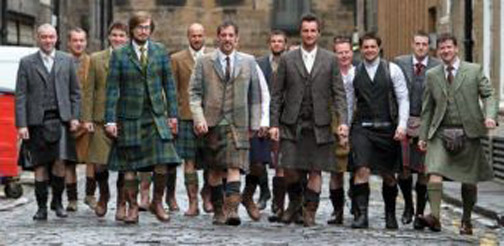
Are YOU brave enough to ask this lot to take their socks off?

Read Full Post »


As last year, just click on the image to the left to be taken to the A-Z website and links to other blogs taking part. Good luck to everyone and I hope the inspiration keeps flowing.

~~~

E is for Einkorn and Emmer

These two early varieties of wild wheat are still slugging it out for the title of the first crop to be grown by early farmers. Grain from both has been found on Paleolithic sites with no other signs of farming, so it is assumed that grain was collected from wild plants. But it is known that wheat was first cultivated in the Fertile Crescent over nine thousand years ago.

It was this cultivation of food crops and the development of a food stuff – grain – that could be stored as a surplus from harvest to harvest that enabled the concentration of humans into cities.

The past couple of days I’ve talked about cats and dogs and relative antiquity of their domestication. Dogs belong to a time of hunters and gatherers and of nomadic herdsmen. But cats were domesticated at about the same time as granaries needed protection from rodents.

Dogs enabled our ancestors to live in the wilderness – they protected them from predators and helped them hunt big game. Cats in protecting the caches of emmer and einkorn, enabled civilisation to develop from Egypt to Assyria.

Model of granary from Thebes, 11th dynasty, approx 2000 BCE

Read Full Post »

Having Fun With My Characters by Lucy Felthouse

I don’t mean that kind of fun! They get up to that sexy stuff with each other, not me 😉
What I’m talking about, in this instance, is writing real character traits, for example awkwardness, into my story, Letters to a War Zone. My lead characters, Bailey and Nick, are an insurance broker and a soldier respectively. I don’t want to give too much away, but the two of them meet through a website that puts people in pen pal contact with serving soldiers. It’s an erotic romance, so I don’t think I’m giving spoilers by saying there’s a happy ending, but I had fun getting the two of them. If it had been as simple as them “meeting,” starting to chat, being attracted to each other and running off into the sunset, then it wouldn’t have been much of a story. There are many hurdles for the two of them to leap. Not least the fact that at the beginning of the story, Nick is in Afghanistan, and Bailey’s in the UK.

Their adorable awkwardness comes into play, too, and this is the part I particularly enjoyed writing. Nick may be a soldier, an alpha male, but it doesn’t automatically make him confident and straightforward when it comes to sex and relationships. Bailey’s not an alpha male at all, so when the two men start to correspond, they certainly don’t cut straight to the chase—not least because, to start with, they don’t even know if they bat for the same team. In fact, they haven’t even thought beyond friendship, beyond exchanging snail mail letters.

I’m not going to give any more away, but when you read Letters to a War Zone, I hope you’ll enjoy the fun exchanges between the two men that show their shyness, their awkwardness, their reluctance to stick their necks out. It made the story feel very real to me. I hope you’ll agree.

Happy Reading,
Lucy x

*****
Letters to a War Zone
Excerpt:

After clicking all the available links on the website to find out more about it, Bailey decided to go ahead and sign up. He’d never know what it was really like unless he gave it a go.

He’d read about the site in an article somewhere, about how it linked people with serving soldiers, pilots, marines and sailors in order to write to them. It had been proven that receiving mail—even from someone they didn’t know—improved military morale. It sounded like a damn good use of time to Bailey, and it would be interesting, too.

He began typing his details into the online form. Of course, the chances were that he’d be paired up with a man, given the ratio of males to females in the forces. It didn’t matter, though. He could still exchange letters with a guy, become friends. It seemed like such an old-school way to communicate with someone, given how technology had come on over the years, but at least it was different. Perhaps it would give him something in his life to look forward to, something other than getting up, showering, going to work, coming home, eating, watching television and going to bed. The watching television—and even the eating—were occasionally replaced by nights out with friends or seeing family. Weekends were spent cleaning, washing clothes, gardening and odd jobs. Dull stuff, in other words.

He had an utterly mundane life, and Bailey knew it. It wasn’t even as if his job was exciting. Insurance broking was hardly thrilling, game-changing, or going to save the world. He didn’t expect having a pen pal to change his entire life, but it would certainly break the monotony. Hopefully.
He went through the various steps to fill in his details and create a profile, then continued right through to the information on actually writing and sending the letters. It looked straightforward enough.

His mind made up, Bailey immediately went in search of a pen, some nice paper and an envelope. Armed with a print out of exactly what to do when the letter was finished, he settled down at the kitchen table. Instantly, his mind went blank. What the fuck was he meant to say? He didn’t know any soldiers or other military personnel, didn’t know anything about their lives, other than there was a great deal more to it than shooting people and being shot at. His own existence was so fucking boring that he didn’t want to write about it. Unless there were any insomniacs in Afghanistan—telling them about his day would solve that particular condition right away.
After chewing on his biro until it broke, covering his lips and chin with ink, Bailey replaced it, resolving to try harder. He’d tell his pen pal the bare essentials about himself, then ask lots of questions about them and their work. That was bound to rustle up some conversation.

That decided, he began to write, absentmindedly swiping at his inky skin with a tissue. He’d have to scrub it off when he was done with the note. His wrist and hand had begun to ache before he was halfway down the page. He rolled his eyes. He sat on his arse at a desk all day, using a computer. As a result, even writing something short by hand was hard work! There was no way he was going to divulge that particular piece of information to someone that was willing to lay down their life to protect their country.

He just about managed to fill a single side of the A5-sized paper. And that was only because he’d formed large letters and spaced his words and lines out plenty. But he tried not to worry—at least he’d finished it, his first letter to a war zone.

He read through it carefully, relieved to find no mistakes. He’d forgotten how much more difficult—and messy—errors were on the written page. Computers let you edit and rewrite to your heart’s content. No correction fluid or crossings-out necessary.

Finally, he addressed the envelope. It felt like the longest address ever. The area and country was bad enough, even without including the soldier’s name and BFPO address. But it was done—Bailey Hodgkiss had penned a missive to Corporal Nick Rock, currently stationed at Camp Bastion, Helmand Province, Afghanistan.

Now he’d just have to post it and wait for a reply. The website had said his missive would take between one and three weeks to reach Corporal Rock. Then he had to allow for time for him to read it and send a reply. It could be around six weeks before he heard anything. If he heard anything at all.

*****

Blurb:

When lonely insurance broker, Bailey, gets himself a new hobby, he ends up exchanging letters with a war zone. But he’s not expecting what happens next…

Bailey Hodgkiss is lonely and dissatisfied with his boring life as an insurance broker. In an attempt to insert some variety, he signs up to a website to write to serving soldiers. He’s put in touch with Corporal Nick Rock, and over the course of a couple of letters, the two of them strike up a friendship. They begin to divulge their secrets, including their preference for men.

Nick encourages Bailey to add more interests to his life. As a result, Bailey picks up his forgotten hobby, photography, and quickly decides to team it up with his other preferred interest, travel.

Booking a holiday to Rome is his biggest gesture towards a more exciting existence, and he eagerly looks forward to the trip. That is, until Nick says he’s coming home on leave, and it looks as though their respective trips will prevent them from meeting in person. Is there enough of a spark between them to push them to meet, or will their relationship remain on paper only?

Available from: http://lucyfelthouse.co.uk/published-works/letters-to-a-war-zone/

Add to your Goodreads shelves: https://www.goodreads.com/book/show/20722128-letters-to-a-war-zone

*****

Lucy Felthouse is a very busy woman! She writes erotica and erotic romance in a variety of subgenres and pairings, and has over 100 publications to her name, with many more in the pipeline. These include several editions of Best Bondage Erotica, Best Women’s Erotica 2013 and Best Erotic Romance 2014. Another string to her bow is editing, and she has edited and co-edited a number of anthologies, and also edits for a small publishing house. She owns Erotica For All, and is book editor for Cliterati. Find out more at http://www.lucyfelthouse.co.uk. Join her on Facebook and Twitter, and subscribe to her newsletter at: http://eepurl.com/gMQb9

*****

GIVEAWAY!

Click here to enter a Rafflecopter giveaway

Read Full Post »


As last year, just click on the image to the left to be taken to the A-Z website and links to other blogs taking part. Good luck to everyone and I hope the inspiration keeps flowing.

~~~

D is for Dog

Well the cats had their turn yesterday so it’s only fair we pay some attention to man’s very oldest best friend.

And the antiquity of that very special relationship is pushed back year by year. The results of DNA analyss and carbon dating of a dog skull found interred in the Altai Mountains of Siberia prove that Canis Lupus familiaris had a place in our hearts 33,000 years ago, and one from Belgium is older yet, clocking in at 36,000 years old.

A study of early Asian dog remains suggested that all modern dogs stemmed from a mutation in the Asian wolf population based in western China about 16,000 years ago, but the Siberian dog remains show a closer alignment to North American wolf populations. This suggests that the domestication of the dog occurred in many places world wide as the opportunity allowed.

One thing that I have not been able to discover is when the mutation occurred that caused floppy rather than pricked ears. I’m a bit sad about that because Wilfred’s floppy ears are my favourite bit of him.

Read Full Post »


As last year, just click on the image to the left to be taken to the A-Z website and links to other blogs taking part. Good luck to everyone and I hope the inspiration keeps flowing.

~~~

C is for Cat

I’ve been told that the first iteration of the World Wide Web was all about experimentation and the second was about easy access to pr0n but as soon as web.2 came along, the cheap and easy one that you didn’t need a degree in Information Technology to use, it became over run with cats.

It’s no wonder really. Cats have been with us for a long time, worshipped as gods by some cultures, persecuted as devils by others.

They appear in Egyptian tomb paintings and in Chinese mythology but so far the oldest evidence to be found is from the island of Cyprus.

Archaeologists excavating the Neolithic village of Shillourokambos discovered the burial of a person of about 30 years of age with the bones of an eight month old cat carefully positioned to mirror the burial of the human. The human was provided with grave goods to denote a very high status and it is possible that the cat was killed in order to be part of the offering. The burial dates to approx 9500 BCE and since cats are not indigenous to Cyprus they must have been imported.

Careful measurements of the bones indicate that the cat was of a similar type to the African wildcat in this picture. Click on the pic for more information.

Of course, cats are not our oldest companions, but more of that tomorrow.

Read Full Post »

A to Z Challenge – B is for …

April 2nd and so we reach B in the alphabet.

As last year, just click on the image to the left to be taken to the A-Z website and links to other blogs taking part. Good luck to everyone and I hope the inspiration keeps flowing.

~~~

B is for Bee

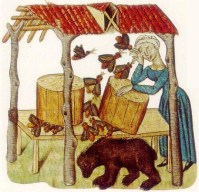
European honey bee showing off her ‘bees knees’

Yea, original I know, but I don’t think it’s possible to stress just how important the humble honey bee has been to our various types of civilisations.

For a start the social structure of the hive has been held up as a great example of how cooperation can bring plenty to all. Today we tend to look at the inequalities and so reject it but in times past when inequality was Everyman’s lot it was much easier to draw parallels. The people who left the free and easy life of hunter gatherers or nomadic herdsmen for the close proximity of the city needed to see how they could benefit from knowing their place and working hard.

Then there were the material benefits that the bee hive provided.

The most obvious of these is honey. For centuries honey was the sweetest food item available to mankind, and was cherished accordingly. But it wasn’t just useful for food. Honey has significant anti-bacterial and anti-inflammatory effects and was used as a wound dressing, by he Egyptians as an ingredient of embalming fluid and as a preservative. When Alexander the Great died in Babylon, his body was lowered into a casket filled with honey to preserve it on the trip back to Macedon. It was stolen by Ptolemaeus and taken to Memphis in Egypt instead where the body was properly embalmed and placed on display in a glass coffin, which suggests that the honey did its job well.

Honey is being used as a wound dressing today, being particularly useful in the treatment of burns.


At a time when human activity was dictated by the hours of daylight, a reliable source of light was prized. In the south olive oil could be used to make lamps but in the cold north we usually had a choice between dips made from animal fat or beeswax candles. The matrix of hexagonal cells made by the bees is very meltable and mouldable and also burns slowly with a clean flame. Candle making was a huge industry right through to the early years of the 20th century because everyone needed candles, from the expensive six feet long candles of pure beeswax used in the great cathedrals and palaces to the little stubs used to light children to bed. The importance of candles passed into idiom with the phrase “it isn’t worth the candle” meaning that something is pointless – it’s not worth lighting a candle to see to do it.


Beeswax also had a political application. All official documents required a seal of approval to show their legitimacy. In the early medieval period these seals were made from a mixture of beeswax and pine resin. Due to the relatively fragile material these seals were often kept in a specially fitted tin box that would protect the image. As contact improved with the near East the beeswax was replaced with shellac or gum arabic, which gave a harder finish. But high quality beeswax was still used on very special occasions.


The honey bee is now sorely afflicted by virus infection. This is more serious than may initially appear. Honey bees are the major pollinators of food crops. Without their busyness crops will ail, especially of fruit and vegetables, and our diet will suffer. Work is being done to preserve the hives but they are in the decline and many wild populations are extinct. Fingers crossed that some treatment will be available soon for the honey bee – worth her weight in gold.

Read Full Post »

A to Z Challenge – A is for …

So it’s April again and time for another 26 days of fun and frivolity. I didn’t manage all of them last year – I think I dropped 3 – so lets see how I do this year.

As last year, just click on the image to the left to be taken to the A-Z website and links to other blogs taking part.

~~~

A is for As

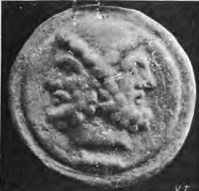
Not ‘as you know, Bob’ but the Roman coin that was the standard unit of currency, plural asses. During the Republican era the as was a massive chunk of bronze. It’s telling to note that after about 70 years of carting these things around the Romans had a coinage reform and reduced the weight to a sixth of a Roman pound [approx 56 grams or 2 ounces].

As with all currency, the as had a chequered career. It veered from bronze to pure copper, back to a cheaper bronze mix, and gradually shrank in size. The silver denarius, originally worth ten asses, was revalued as 16 asses in 140 BC as a means of paying for the Punic Wars. Under the Imperium the as was devalued still further. During the rule of Diocletian, who presided over one of the biggest financial crises ever seen in Rome, wages fell and prices soared. Labourers who were paid 400 asses a month had to pay 170 a pound for pork. The ‘doles’ of wheat provided by the government was the only thing that kept many families going.

However, the as also contributed to everyone’s social life. We know this because we have contemporary evidence hand written by the people of the time. Barbers and bath houses wrote their tariffs on their walls. So did bars. For instance “You can get a drink here for an as. You can drink better wine for two asses. But for four asses you can drink Falernian” appears on the wall of the bar of Colepius on the Street of Augustus in Pompeii, just around the corner from the brothel.

Hedone dicit: Assibus singulis hic bibitur; dupundium si dederis, meliora bibes; quartum assem si dederis, vina Falerna bibes.
{Photo © Jackie and Bob Dunn}

Read Full Post »

« Newer Posts